
Company Turns to Former Taco Bell Leader Amid Ongoing Challenges
Jack in the Box is continuing its aggressive restructuring strategy after announcing another major leadership change at the top of the organization.
The restaurant company confirmed that Lance Tucker has stepped down as CEO after only 14 months in the role. Taking over immediately as interim chief executive is Mark King, the former Taco Bell CEO who recently became chairman of the board.
King’s appointment comes during a critical phase for the company as it continues implementing the “Jack on Track” recovery plan introduced in 2025. The initiative was designed to improve financial stability, reduce debt exposure, close weak-performing restaurants and strengthen long-term franchise performance.
Federal filings show King’s interim compensation package includes a monthly salary of $125,000 plus restricted stock awards valued at approximately $2.4 million.
Jack in the Box has also launched a search for a permanent CEO while appointing Alan Smolinisky as lead independent director.
Restaurant Closures Expected to Increase
During the company’s second-quarter earnings discussion, King told investors the turnaround strategy would move faster over the coming months.
The company now plans to close an additional 50 to 100 underperforming restaurants during fiscal 2026. Those closures are part of the broader Jack on Track initiative, which initially targeted the shutdown of up to 200 low-performing locations across the system.
Most of the affected restaurants are operated by franchisees rather than the corporate entity itself.
According to King, many operators are now actively seeking faster exit options for weaker locations. However, existing lease agreements continue creating complications that slow the process.
To help accelerate closures, corporate leadership plans to assist franchisees in negotiating lease exits directly with landlords.
The company currently operates 2,128 restaurants nationwide, a notable shift from the aggressive expansion strategy it pursued several years ago when it hoped to develop thousands of additional units in both existing and emerging markets.
Quarterly Financial Results Reveal Ongoing Pressure
Jack in the Box continues facing significant operational and financial challenges despite slightly outperforming earnings expectations.
For the quarter ending April 12, the company reported earnings of 76 cents per share. Revenue, however, declined 4.3% to $254.3 million compared with the same quarter the previous year.
Comparable restaurant sales also moved lower throughout the system. Overall same-store sales dropped 3.8%, including a 3.9% decline at franchise-operated restaurants and a 2.8% decrease at company-owned stores.
The company is also dealing with higher labor expenses and rising commodity costs that reduced restaurant-level margins by 16.4%.
Leadership said balancing promotions with profitability remains a top priority as the company attempts to increase guest traffic without damaging long-term margins.
New Chief Marketing Officer Katelyn Zborowski, who joined the company from Yum Brands earlier this year, is expected to play an important role in refining pricing strategies and promotional positioning.
Franchise Operators Become Priority Focus
Throughout the earnings call, King repeatedly emphasized the importance of franchisee profitability to the company’s overall recovery.
Chief Operating Officer Shannon McKinney has created a committee made up of both franchise operators and corporate leadership to identify operational changes and financial strategies that can strengthen unit-level performance.
King stated that franchisee success must remain central to every decision made by the company moving forward.
Average unit volume declined to $1.91 million in 2025 compared with $1.98 million the prior year, adding more pressure to restaurant operators already navigating difficult economic conditions.
Leadership believes stronger collaboration with franchisees and faster operational improvements will help stabilize the business over time.
Real Estate Sales Supporting Debt Reduction Strategy
Selling company-owned real estate continues playing a major role in Jack in the Box’s restructuring efforts.
The company has already generated approximately $14.7 million from property sales and expects another $35 million to $45 million in proceeds before the fiscal year concludes.
Those funds are expected to be used primarily for debt repayment.
Jack in the Box previously owned the land and buildings associated with approximately 170 franchised restaurants before leasing the properties back to operators.
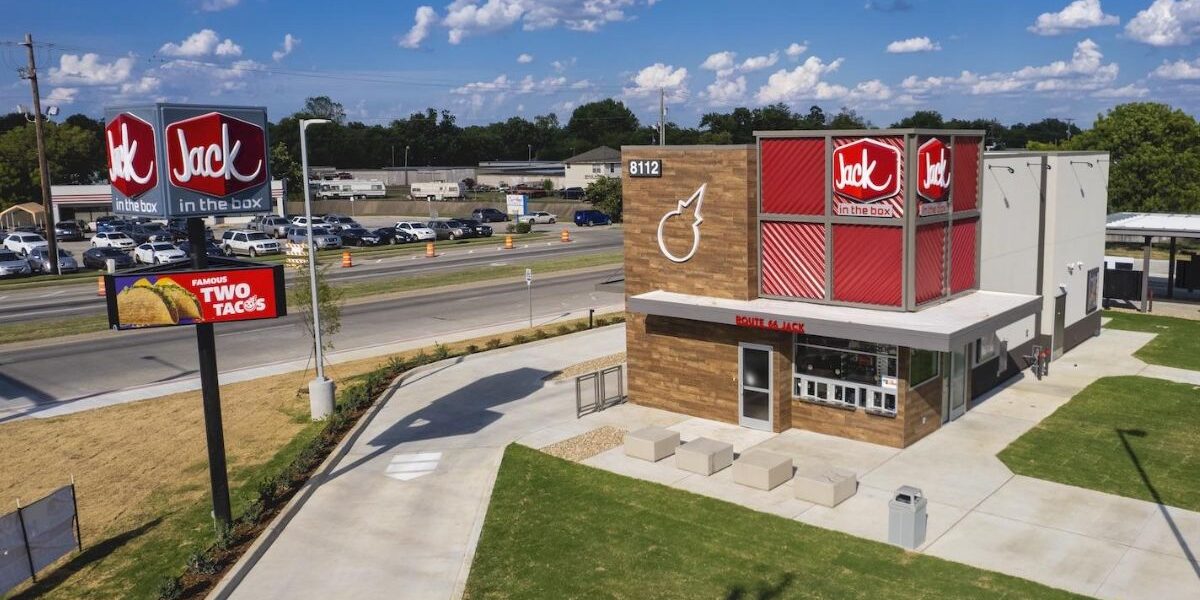
At the same time, the company says smaller-scale restaurant refresh projects are generating encouraging returns. Minor improvements such as landscaping upgrades, parking lot striping and exterior touch-ups are reportedly helping improve sales performance at select locations.
Executives say the pace of these refresh projects has more than doubled this year.
Menu Strategy Designed to Capture Multiple Customer Segments
Jack in the Box is also adjusting its menu strategy to better address changing consumer behavior.
The company is simultaneously promoting value-focused meal deals while introducing more premium menu offerings. Executives described the approach as a “barbell strategy” intended to attract both price-sensitive customers and higher-spending guests.
Recent premium menu additions include Smashed Jack sliders and loaded wings, while lower-priced meal promotions continue targeting budget-conscious consumers.
Leadership is also working on improving restaurant operations, menu efficiency and the overall customer experience across the system.
Early results from the current quarter suggest same-store sales trends are beginning to stabilize and are approaching flat performance levels.
Company Sees Potential Recovery in Late 2026
Despite ongoing challenges, leadership believes the turnaround strategy may begin delivering stronger results during the second half of fiscal 2026.
Executives say the combination of restaurant optimization, debt reduction, operational efficiency improvements and refreshed marketing strategies could help reposition Jack in the Box for healthier long-term performance.
King told analysts the company is encouraged by early momentum in several recovery initiatives and believes the business is moving in a more positive direction heading into the back half of the year.