
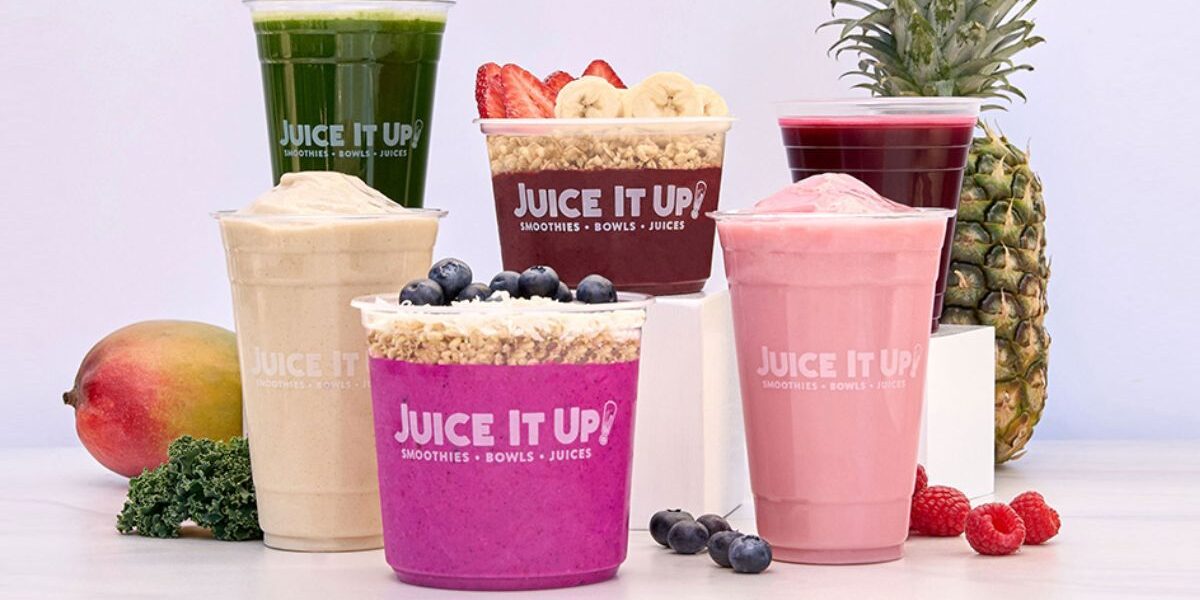

Juice It Up is proving that restaurant menu innovation doesn’t have to mean chasing every new food trend.
The 31-year-old smoothie, juice and acai bowl brand is instead focusing on products that customers enjoy and that can deliver meaningful benefits, while making sure new additions work for franchise owners.
CEO Susan Taylor has made that philosophy part of the company’s broader evolution over the past six years.
Along with expanding the franchise system, Juice It Up has increased its attention on digital ordering, loyalty and developing products around changing customer expectations.
In 2026, one category in particular has stood out: protein.
The Zone Smoothie Becomes a Major Sales Driver
Juice It Up entered the year by expanding its Zone smoothie range with additional fruit choices.
Already established on the company’s menu, the Zone combines protein powder and peanut butter as part of a protein-focused smoothie option.
Customer response to the expanded lineup was strong.
The limited-time products generated more than 10% of the franchise system’s sales during the first three months of 2026.
Rather than stopping there, Juice It Up continued building its protein selection.
The company introduced smoothies featuring Chobani Greek Yogurt after approximately two years of discussions and planning between the brands.
Together, the two initiatives added $1.3 million to Juice It Up’s protein category during the first half of 2026. Protein sales increased 31% compared with the prior year.
New Smoothies Have to Work for Franchise Owners
Behind those launches is a testing process designed to reduce uncertainty for the company’s franchisees.
Juice It Up currently uses 11 restaurants to test menu innovations and employee training. Ten are franchise locations.
Testing new ideas in actual stores allows the company to see how customers respond while also evaluating the operational side of a product.
A new smoothie may attract attention, but it also needs to be easy enough to execute and capable of generating sufficient revenue and profit.
That’s particularly important for franchise owners, who may need to bring in new ingredients and spend time training employees whenever the brand makes a significant menu change.
By testing first, Juice It Up can gather real-world information before deciding whether a product deserves a systemwide rollout.
Franchisee Feedback Provides Another Source of Ideas
Store owners also play an active role in shaping future menu decisions.
Juice It Up brings franchisees together every quarter to talk about what they are seeing in their markets. Customer questions, requests and buying behavior can all provide clues about where the menu should go next.
Those discussions give the corporate team information directly from the people interacting with guests every day.
That doesn’t mean every customer request becomes a new product.
Instead, the company combines franchisee feedback with broader research to identify opportunities that make sense for the Juice It Up brand.
Why Juice It Up Doesn’t Chase Every Trend
The restaurant business moves quickly, especially on social media.
One ingredient or beverage can suddenly become popular and encourage brands across the industry to introduce their own versions. Taylor believes that approach can create problems when companies react too late.
By the time a product is developed, tested and launched, customers may already have moved on.
Juice It Up therefore watches trends without allowing them to dictate every decision.
The company’s team monitors international restaurant brands, food discussions across social media and ideas emerging from conferences and other industry gatherings.
It also holds an annual internal review to examine the entire menu and consider which products remain important, what may need to disappear and which categories deserve more attention.
Preparing for Tomorrow’s Smoothie Customer
Juice It Up’s strategy is ultimately about staying relevant without losing sight of what made the business successful.
Taylor wants the company to think about what customers could expect from smoothie and juice brands a decade from now, not simply what is popular today.
The early results from its protein strategy suggest that the approach is working. A 31% increase in the protein category and $1.3 million in additional sales demonstrate the potential impact when product development aligns with genuine consumer demand.
For Juice It Up, the next stage of growth isn’t about filling the menu with every new idea. It’s about choosing the right ones, proving they work and giving franchisees products with a real opportunity to build sales.
Learn more about Juice It Up franchise opportunities.