
McDonald’s Responds to Changing Consumer Habits With a Decade-Long Transformation
McDonald’s built its global reputation around scale, consistency and convenience. Its next challenge is making that enormous system faster, more modern and more competitive without putting excessive pressure on the franchisees who operate most of its restaurants.
Its answer is McDonald’s > NEXT.
The company plans to provide approximately $8.5 billion in franchisee support through 2036 to help modernize restaurants, deploy technology and improve operations.
Approximately $5 billion is expected to be provided before the end of 2030 through a combination of capital assistance and rent relief.
This is much more than a restaurant remodeling program.
It is a long-term effort to redesign how one of the world’s largest franchise systems operates.
The Fast-Food Business Has Changed
Quick-service restaurants are no longer competing only on burgers, fries, locations and drive-thru speed.
Consumers can choose from specialized chicken restaurants, premium burger concepts, coffee chains, beverage brands, convenience stores and rapidly growing fast-casual operators.
Digital ordering has also transformed customer expectations.
People increasingly expect personalized deals, simple mobile ordering, accurate delivery and fast pickup—while still wanting affordable prices and consistent food quality.
McDonald’s acknowledged this changing competitive environment when introducing its NEXT strategy earlier in 2026.
Now it is putting significant capital behind the plan.
Franchisees Cannot Be an Afterthought
Nearly 95% of McDonald’s restaurants globally are operated by franchisees and developmental licensees.
That structure has helped McDonald’s achieve enormous international scale, but it also means corporate transformation requires cooperation from thousands of independent business owners.
Restaurant renovations and new equipment can be costly.
Technology investments can be expensive.
Operational changes can require additional training and temporary disruption.
McDonald’s is therefore sharing part of the financial burden rather than expecting operators to absorb the full cost.
The proposed $8.5 billion package includes capital support and rent relief, with assistance structured according to individual market conditions.
That could prove important as operators deal with higher labor, construction and operating expenses.
The $100,000 Question
The most interesting number connected to NEXT may actually be smaller than $8.5 billion.
It is $100,000.
McDonald’s estimates that the planned operational improvements could generate approximately $100,000 in annual cash-flow benefit for an average U.S. restaurant.
The company is targeting roughly 250 basis points of gross restaurant-level efficiency improvement and expects most of the benefit to eventually reach restaurant-level profitability.
McDonald’s estimates an approximately four-year payback for franchisees after financial assistance is included.
Those projections will matter because franchise owners ultimately judge major initiatives at store level.
A new restaurant design may look impressive. New technology may sound innovative. But operators need improvements that increase revenue, lower costs, improve throughput or achieve some combination of all three.
Technology Is Becoming Part of the Restaurant Infrastructure
McDonald’s has spent years building its digital capabilities.
NEXT takes the strategy deeper into restaurant operations.
One major initiative is ArchIQ, which incorporates generative AI capabilities into the company’s restaurant technology platform.
McDonald’s expects technology to help simplify operations, improve restaurant execution and ultimately create a better experience for employees and customers.
Restaurant designs will also evolve.
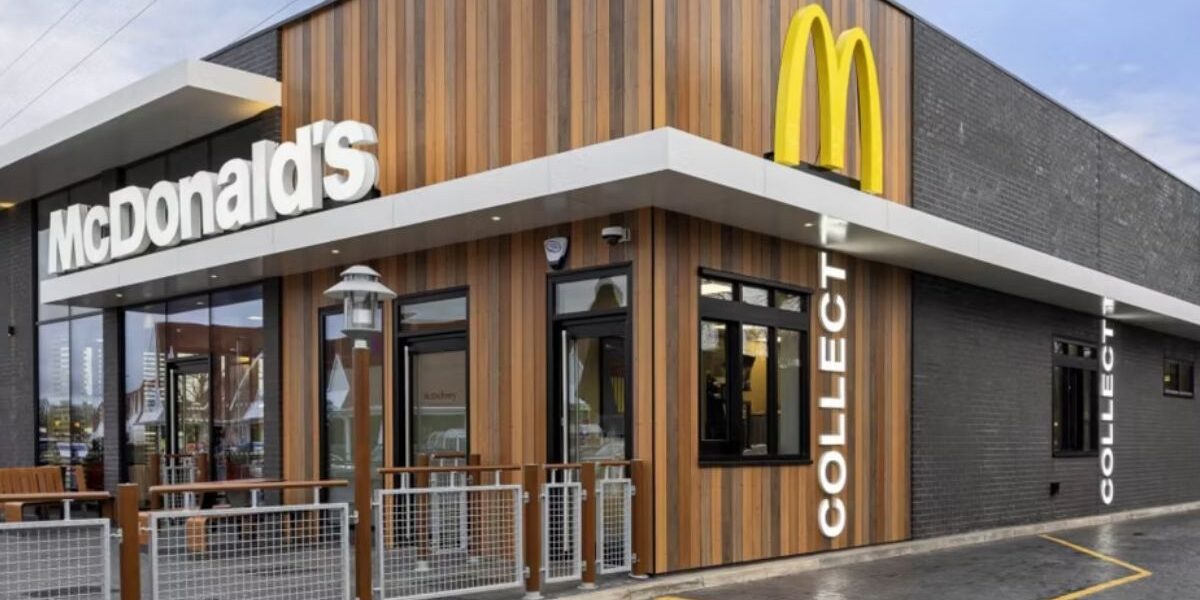
Customers could see enhanced pickup areas, refreshed dining rooms, updated play spaces and more visible beverage preparation.
The physical restaurant increasingly needs to accommodate multiple businesses inside one location: dine-in, drive-thru, delivery, mobile ordering and digital pickup.
NEXT is intended to make those channels work together more efficiently.
McDonald’s Sees Chicken as a Major Battleground
Beef may have built McDonald’s, but chicken represents one of its largest future growth opportunities.
The company wants to gain approximately 1.5 percentage points of market share in chicken by 2030.
It is setting the same target for beverages.
McDonald’s already occupies a strong position in burgers, so expanding its presence in adjacent categories gives the company another path to sales growth without abandoning its core identity.
Chicken is especially important because the global category is larger than beef and continues attracting aggressive competition.
Beverages provide a different opportunity.
Coffee, cold drinks and specialty beverages can create additional visits throughout the day and help McDonald’s compete for customers who may not necessarily be purchasing a full meal.
The Loyalty Platform Changes the Equation
McDonald’s now has nearly 220 million active loyalty members across approximately 70 markets.
That creates a significant strategic advantage.
Traditional restaurant marketing often depended on mass promotions. Digital loyalty allows McDonald’s to increasingly communicate with customers according to their individual purchasing patterns.
A customer who frequently buys breakfast does not necessarily need the same offer as someone who regularly purchases chicken products or visits during the afternoon.
Personalization can potentially improve marketing efficiency while increasing customer frequency.
When combined with more efficient restaurant operations, McDonald’s believes digital engagement can help generate more visits without relying exclusively on price promotions.
Better Technology Still Requires Better Service
One of the more notable elements of NEXT is McDonald’s renewed emphasis on hospitality.
Its Make It Golden initiative is designed to strengthen food execution and customer service across the system.
There is logic behind the decision.
Technology can make ordering easier, but restaurant customers still judge a brand by whether their food is prepared correctly, employees are helpful and service is fast.
Digital systems cannot fully compensate for poor execution inside a restaurant.
McDonald’s therefore wants its technology investments and employee development programs to reinforce each other.
McDonald’s Is Investing for the Next Decade
The company is pairing its restaurant strategy with ambitious financial objectives.
McDonald’s is targeting operating margins in the low-to-mid 50% range by 2030 and expects restaurant development to remain an important contributor to systemwide sales growth.
The company’s massive franchise network gives McDonald’s an extraordinary advantage when a new operating model succeeds because improvements can eventually be deployed across thousands of restaurants.
Scale, however, also makes change difficult.
An initiative that appears relatively simple at corporate headquarters can become enormously complex when it reaches thousands of independently operated locations across different markets.
That is why the franchisee component of NEXT deserves attention.
McDonald’s isn’t simply asking operators to modernize. It is committing billions toward helping the system make the transition.
The ultimate test will be whether those investments deliver the combination McDonald’s is seeking: healthier restaurant economics for franchisees, easier operations for employees and a better reason for customers to choose the Golden Arches more often.
If that happens, the $8.5 billion investment could prove to be less about renovating restaurants and more about rebuilding McDonald’s competitive advantage for its next era of growth.
Learn more about McDonald’s Franchise opportunities.