
From Crew Member to Multi-State Operator: Inside Isaac Montoya’s Cheba Hut Expansion
Some multi-unit franchise careers begin with an investment presentation, a franchise agreement and a search for the first location.
Isaac Montoya’s started inside the restaurant.
More than a decade after joining Cheba Hut as a college student, Montoya is now leading Wahi Brands through an aggressive multi-state expansion that has transformed him from restaurant employee into one of the sandwich franchise’s major growth operators.
His journey also highlights an increasingly relevant question for expanding franchise systems: can a business scale rapidly while preserving the neighborhood-level relationships that helped individual restaurants succeed?
Wahi Brands is betting that it can.
The Journey Started in 2012
Montoya joined Cheba Hut while studying at the University of New Mexico in 2012.
He began as a crew member, but his advancement came quickly. Within about six months, he had become a general manager.
His relationship with the business eventually evolved from employment into ownership when he became an equity partner in Cheba Hut’s original New Mexico restaurant.
Instead of learning restaurant ownership exclusively from the executive level, Montoya experienced the day-to-day mechanics of the concept firsthand.
That foundation would eventually help support a much larger development strategy.
Wahi Brands subsequently expanded Cheba Hut throughout New Mexico before entering additional markets in Texas and Montana. The company has now moved east with its first Virginia restaurant.
Eight Restaurants and a Much Larger Pipeline
Wahi Brands’ Midlothian restaurant became its eighth Cheba Hut location and the sandwich franchise’s first store in Virginia.
It is unlikely to remain the only one for long.
The company has a 10-unit development agreement covering Virginia, with additional restaurants planned as Wahi Brands builds out the territory.
Colonial Heights is expected to become another Virginia market for the group, while further development is planned elsewhere in the state.
Michigan is also part of the expansion roadmap.
As those plans move forward, Wahi Brands is positioned to become the first Cheba Hut franchise organization operating the concept across five states.
Montoya has set a goal of reaching approximately 14 operating Cheba Hut restaurants by the end of 2027.
Growth Has Not Replaced Grassroots Marketing
The scale of Wahi Brands’ expansion might suggest a growing dependence on centralized advertising.
Instead, the company continues to place significant emphasis on local outreach.
Managers are encouraged to leave the four walls of their restaurants and become active participants in their markets.
That means showing up at school and university events, distributing promotional offers, introducing people to the menu and finding ways to put Cheba Hut food directly in front of potential customers.
It is an old-school strategy operating alongside modern restaurant marketing.
Consumers are surrounded by paid advertisements every day. Sampling creates something advertising cannot completely reproduce: a direct product experience.
For a restaurant entering an unfamiliar market, that interaction can be particularly valuable.
Restaurants Become Part of Their Communities
Wahi Brands extends that philosophy beyond promotional events.
Its restaurants work with nonprofits and charitable organizations, including efforts aimed at providing meals for people facing food insecurity.
The goal is not simply to generate short-term restaurant traffic. Regular community participation can help transform a new location from an unfamiliar chain into a recognizable local business.
Cheba Hut’s broader operating philosophy complements this strategy.
The franchise maintains a recognizable national identity while allowing stores to incorporate elements of their individual markets.
Locally influenced murals are one visible example. Restaurants can also develop connections with regional businesses, events and community organizations.
This balance gives a growing franchise an opportunity to remain recognizable without becoming completely standardized.
The Numbers Behind Wahi Brands’ Growth
The expansion story becomes more significant when viewed alongside Wahi Brands’ reported sales performance.
Across the group’s Cheba Hut portfolio, average unit volume is approximately $2.8 million. Certain locations have reportedly generated as much as $4 million annually.
Cheba Hut’s franchised locations, by comparison, averaged approximately $2.3 million in net sales during 2025.
These figures help explain why maintaining existing restaurant performance is so important as Wahi Brands expands.
Adding locations can increase revenue and geographic reach, but every new restaurant also adds employees, managers, real estate obligations and operational complexity.
The challenge for a multi-unit franchisee is therefore not simply opening quickly. It is building an organization capable of supporting additional stores without sacrificing execution at established locations.
Cheba Hut Is Reaching Beyond Its Traditional Audience
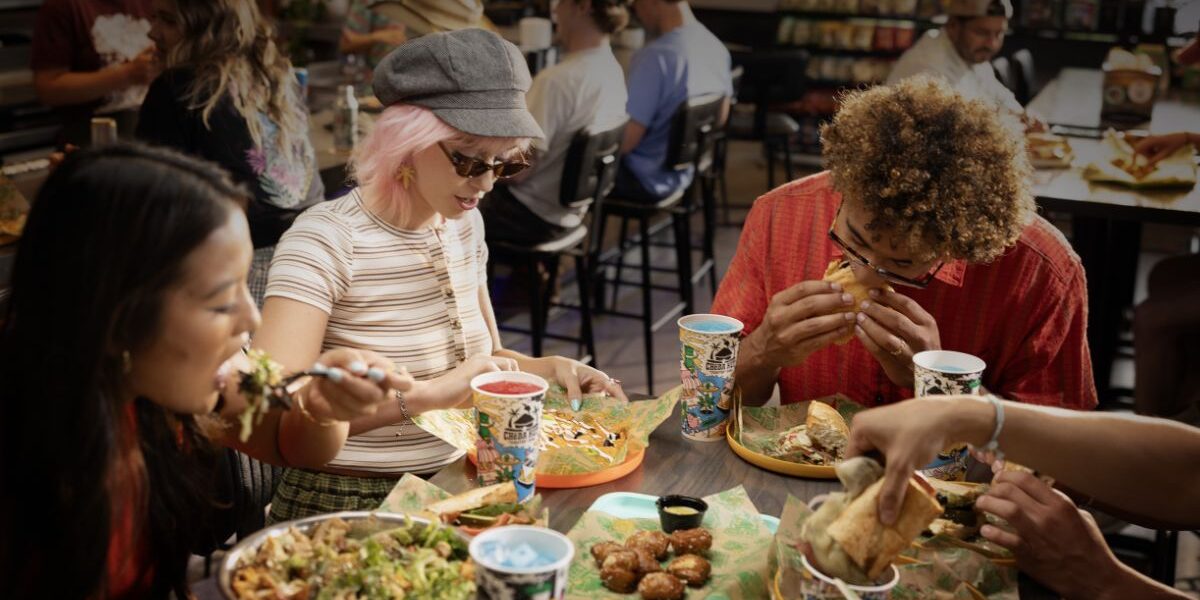
Cheba Hut’s brand identity has historically aligned naturally with younger consumers and college markets.
Its cannabis-inspired theme, casual environment and unconventional branding helped differentiate it in a crowded sandwich category.
But Montoya has seen another customer group become increasingly relevant inside Wahi Brands’ restaurants: families.
The group has experienced success outside traditional college trade areas, suggesting the concept may have room to expand further into suburban communities.
That evolution could have meaningful implications for future development.
Restaurant brands become easier to scale geographically when operators have multiple viable real estate profiles rather than depending on one type of market.
A concept capable of attracting university students, young professionals and families has a broader potential development map than one dependent primarily on campus traffic.
Operational Discipline Will Determine the Next Phase
The next stage of Wahi Brands’ growth will require more than selecting locations and opening restaurants.
Multi-state operations require stronger management systems, training infrastructure and leadership depth.
Montoya has previously outlined an emphasis on improving training, strengthening leadership and using data to increase operational and marketing efficiency.
Those investments become increasingly important as decision-making moves beyond a handful of restaurants.
At eight locations, an owner can maintain substantial visibility across the organization. At 14, 20 or more restaurants spread across several states, systems and management structure become considerably more important.
That is where Wahi Brands’ next challenge lies.
A Different Model for Building a Multi-Unit Franchise Business
Montoya’s story demonstrates how franchise expansion can emerge from deep operating experience rather than outside investment alone.
He started as an employee, became a manager, moved into equity ownership and ultimately built a multi-state franchise organization.
More importantly, the marketing principles used when the operation was smaller have not disappeared as the business has grown.
Wahi Brands continues to rely on local events, community relationships, food sampling and restaurant-level leadership while simultaneously building a larger development pipeline.
That combination may be one of the most interesting elements of its strategy.
Franchising is built around replicating systems. But restaurants ultimately operate in individual neighborhoods, each with different customers, competitors and community dynamics.
Wahi Brands’ expansion suggests that successful scale does not necessarily require choosing between standardized systems and local personality.
The opportunity may be in combining both.
Learn more about Cheba Hut Franchise opportunities.