
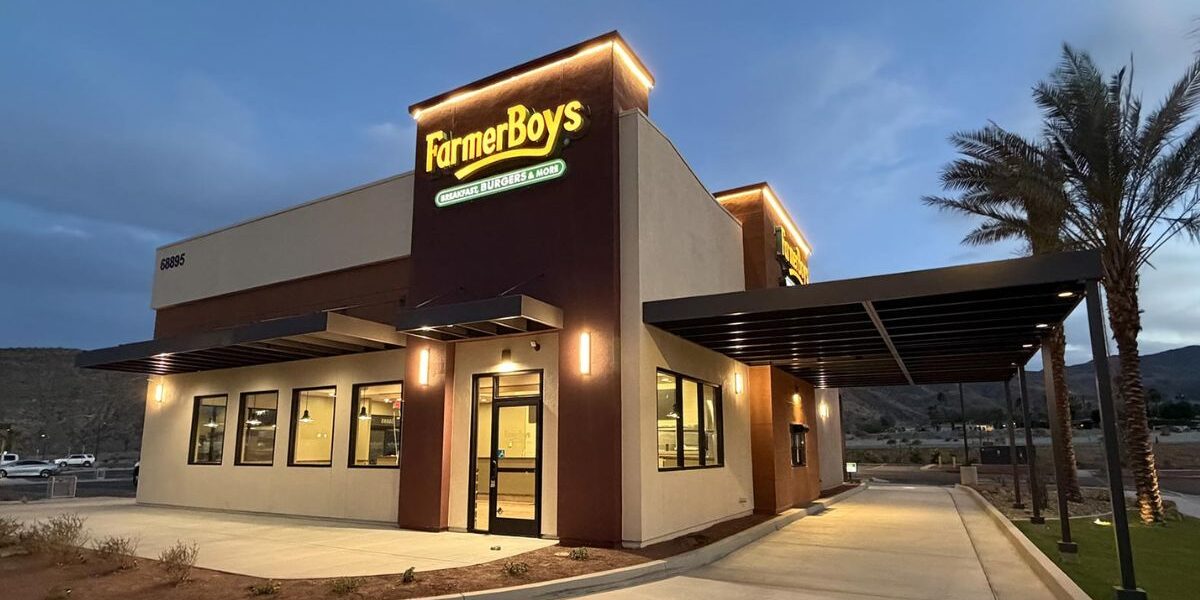

Longtime Franchise Owners Are Helping the Restaurant Brand Reach More Western Markets
One of the most interesting indicators of confidence in a franchise system occurs when an existing owner decides to open another location.
Farmer Boys is currently benefiting from exactly that type of expansion.
The fast-casual restaurant brand is adding locations through longtime franchise operators who have spent years inside the system and are now extending their portfolios into additional communities.
Recent openings in Mesa, Arizona, and Cathedral City, California, highlight how Farmer Boys is using experienced ownership groups to support its next stage of development.
From One Arizona Restaurant to a Growing Statewide Presence
Farmer Boys’ development in Arizona began with an operator who was already deeply familiar with the company.
Omar Mawas became a Farmer Boys franchisee in California in 2007. More than a decade later, he played a central role in bringing the concept into Arizona.
The state’s first Farmer Boys restaurant opened in Gilbert in 2021.
What began with a single Arizona location has since developed into a broader presence, with the company now operating six restaurants across the state.
The latest addition opened in Mesa in August.
Mawas has simultaneously grown into a significant multi-unit Farmer Boys operator. He currently has nine restaurants open and another four in development, with operations spanning Arizona, Los Angeles and San Diego.
His progression shows how a franchise relationship can evolve over time. Instead of remaining a single-location owner, an experienced operator can become an important development partner as the brand enters new markets.
A Veteran Operator Brings Farmer Boys Back to Cathedral City
Farmer Boys is seeing similar franchisee-led growth in California.
In April, the company opened a restaurant in Cathedral City under the ownership of Dilip Bhavnani.
The opening brought Farmer Boys back into the Coachella Valley with its first new restaurant in the region in more than two decades.
Bhavnani is far from a newcomer to either restaurants or Farmer Boys.
He has more than 30 years of restaurant industry experience and began operating with the brand in 2003, when he opened a Farmer Boys restaurant in Pomona.
His business later expanded into Chino and Huntington Beach. Cathedral City became his fourth location with the brand.
Farmer Boys believes the Coachella Valley offers additional development potential, making the new restaurant potentially more than a standalone opening. It could help establish the foundation for further growth in the market.
Why Repeat Franchise Investment Deserves Attention
New franchise agreements generate headlines, but repeat investment from existing operators can tell another important story.
A franchisee considering a second, fourth or ninth restaurant evaluates the opportunity from a different perspective than someone entering the system for the first time.
Existing owners have direct knowledge of the operating model. They have experienced labor requirements, food costs, local marketing, customer demand, franchisor support and the realities of running the business.
When those operators continue to expand, it can become a meaningful part of a brand’s development story.
That does not automatically guarantee the success of future locations, but it does show that experienced franchisees are willing to continue growing within the system.
Farmer Boys’ current expansion provides a clear example of this dynamic.
Farmer Boys Has Been Developing Its Concept Since 1981
The history behind Farmer Boys also differentiates the restaurant chain from many newer fast-casual concepts.
Its founders grew up on a family farm in Cyprus, where agriculture and restaurant work were part of their early lives.
After immigrating to the United States, the brothers purchased a restaurant in Torrance, California, in 1979. Two years later, they launched the first Farmer Boys restaurant in Perris.
The Farmer Boys name reflected their farming background, while freshness became an important part of the restaurant concept.
More than four decades later, the company continues to position itself around made-to-order meals and fresh ingredients.
Burgers, Breakfast and Fresh Ingredients Shape the Concept
Although burgers are central to Farmer Boys, the menu reaches beyond a traditional burger restaurant format.
The concept serves all-day breakfast, salads, sandwiches, burgers and signature sides. Its food positioning includes never-frozen beef, cage-free eggs, fresh produce and items prepared in-house.
The availability of breakfast throughout the day can also provide Farmer Boys with additional opportunities to attract customers beyond traditional lunch and dinner periods.
Restaurants combine dine-in service with drive-thru and digital ordering, giving customers several ways to use the brand.
This broad operating format has helped Farmer Boys build a footprint exceeding 100 restaurants across California, Nevada and Arizona.
Experienced Franchisees Could Shape the Brand’s Future
As restaurant franchisors compete for attractive real estate and qualified operators, Farmer Boys appears to be leaning into one of the resources already available within its system: existing franchise partners.
That approach can become particularly valuable when moving into new territories.
An experienced operator already understands what is required to open and manage the concept. The franchisee can apply knowledge gained at existing restaurants to future development while helping preserve consistency as the system expands geographically.
Mawas’ Arizona expansion illustrates this strategy particularly well. After years with Farmer Boys in California, he became an important part of the brand’s entry and subsequent development in Arizona.
Bhavnani’s expansion offers another example, with a veteran operator helping Farmer Boys renew its presence in the Coachella Valley.
The Next Chapter for Farmer Boys Franchise Growth
Farmer Boys enters its next stage of development with several advantages: decades of operating history, more than 100 restaurants, established recognition in Western markets and franchisees who have demonstrated an appetite for multi-unit ownership.
The challenge will be translating those strengths into disciplined expansion.
Restaurant franchise growth requires the right locations, sufficient capital, experienced management and strong unit-level operations. Rapid expansion without those fundamentals can create pressure rather than value.
Farmer Boys’ recent openings point toward a more experienced-operator-driven approach.
Instead of treating every restaurant as an isolated development project, the company is building relationships with franchisees capable of operating portfolios.
If that strategy continues, Farmer Boys could use its existing franchise network not only to add restaurants, but also to build stronger regional clusters as it expands throughout the Western United States.
Learn more about Farmer Boys Franchise opportunities.