
Why Zaxby’s Expansion Into Airports and Highway Stops Signals a New Era for Restaurant Franchising
Restaurant chains have traditionally measured growth by the number of stores they open and the new cities they enter. But the industry is beginning to place greater emphasis on another question: how easily can customers access a brand during their normal routines?
Zaxby’s latest expansion plans provide an interesting example of this shift.
The American chicken restaurant chain is extending its reach into travel destinations and other nontraditional locations, including highway service plazas, airports, college campuses, and military facilities.
Its agreement to establish five restaurants along Florida’s Turnpike demonstrates how established foodservice brands are looking beyond conventional retail properties to build customer relationships.
The strategy is about more than opening restaurants. It reflects changing expectations around convenience, accessibility, and the way consumers interact with restaurant brands.
The Traditional Restaurant Location Is No Longer the Only Growth Model
For many years, successful restaurant expansion depended heavily on securing prominent properties in busy commercial districts.
Visibility, parking availability, surrounding population, and traffic counts were central to site selection.
Those factors remain important, but the way people purchase restaurant meals has changed considerably.
Consumers increasingly make food decisions around convenience and immediate circumstances.
Someone traveling between cities may choose a restaurant at a service plaza rather than exit the highway. A university student may prefer an accessible campus dining option over traveling to a nearby shopping district.
These decisions create opportunities for restaurant operators willing to rethink where their businesses belong.
Zaxby’s is responding by considering locations that integrate foodservice into existing consumer activities.
Rather than expecting every customer to visit a traditional restaurant, the brand is expanding into places where potential customers are already present.
Florida Turnpike Expansion Introduces Zaxby’s to New Audiences
The company’s five-unit agreement with Areas USA places highway travel at the centre of its latest nontraditional development initiative.
The first restaurant has opened at Orlando’s Turkey Lake Service Plaza, with additional restaurants planned within Florida’s Turnpike service plaza network.
For travelers, highway service plazas are practical destinations for refueling, taking breaks, and purchasing meals.
For restaurant brands, these facilities provide access to customers who may not live near an existing location.
That distinction matters.
A traditional restaurant typically develops repeat business within a defined geographic trading area. A highway restaurant may serve a much wider audience, including people visiting from different states or regions.
Some customers may already recognize Zaxby’s, while others may encounter the brand for the first time.
The location therefore provides both a foodservice opportunity and a potential introduction to future customers.
Why Convenience Is Becoming Central to Restaurant Competition
The quick-service restaurant industry is highly competitive, particularly in the chicken category.
Consumers can choose among numerous restaurant concepts offering chicken sandwiches, tenders, wings, and other convenient meals.
Menu quality and pricing remain important, but accessibility can influence purchasing decisions just as strongly.
A customer who is hungry while traveling may select the most convenient suitable restaurant rather than search for a preferred brand several miles away.
This creates an important competitive consideration.
Restaurant companies need to think about where customers are likely to make food purchases, not simply where suitable commercial buildings are available.
Airports, transportation hubs, universities, and other specialized destinations can bring restaurants closer to these purchasing moments.
For Zaxby’s, expanding into these settings provides opportunities to compete for occasions that traditional suburban restaurants may not capture.
The Importance of Restaurant Design in Modern Franchising
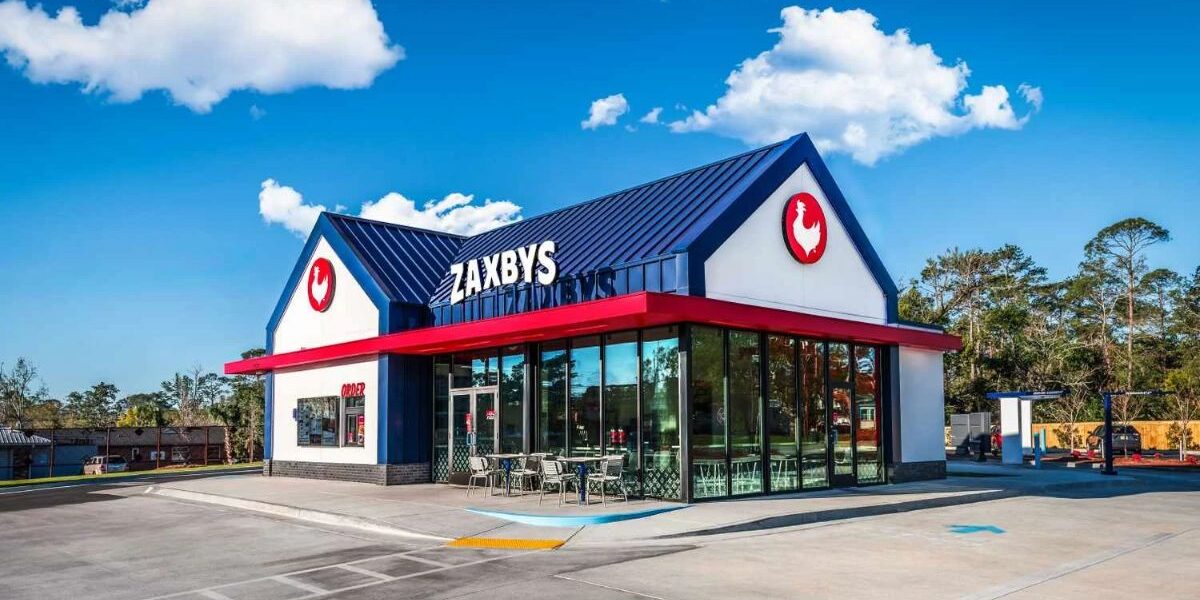
Another interesting aspect of Zaxby’s expansion is the transformation of its physical restaurant model.
The company historically relied on a relatively standardized restaurant format.
Its newer development strategy offers multiple building configurations, including smaller footprints and drive-thru-oriented designs.
This reflects a broader change in how restaurant brands approach physical space.
Large dining rooms may be valuable in some markets, but they are not equally necessary in every environment.
A restaurant inside a transportation facility has different requirements from one located in a suburban shopping district.
Customer movement, kitchen efficiency, ordering systems, and available floor space can all influence the appropriate design.
By creating adaptable formats, restaurant companies can respond to different operating conditions without abandoning their core menu or brand identity.
For franchise owners, this flexibility may create opportunities to consider properties that would previously have been unsuitable.
Zaxby’s National Growth Provides the Foundation
Zaxby’s expansion into alternative locations is taking place after the brand achieved a major milestone.
The company surpassed 1,000 restaurants entering 2026, following decades of development since its founding in 1990.
Originally associated primarily with the Southeastern United States, Zaxby’s has expanded into additional markets, including Las Vegas, Phoenix, and New York City.
This geographic growth is significant because building recognition outside an established regional market presents challenges.
New customers must become familiar with the restaurant’s menu, positioning, and overall dining experience.
Traditional advertising can help establish awareness, but physical restaurant exposure also matters.
A location in a travel hub may introduce the brand to consumers from markets where its restaurant presence remains limited.
As the company continues expanding, nontraditional locations could support broader recognition alongside conventional store development.
Could Smaller Restaurants Change Franchise Investment Opportunities?
Flexible restaurant footprints can affect how investors evaluate franchise opportunities.
A conventional restaurant may require substantial construction, equipment, seating, and site development expenditures.
Smaller or specialized formats can sometimes reduce certain capital requirements, depending on the property and operating model.
However, it would be misleading to assume that every nontraditional restaurant costs less to establish or operate.
Airport facilities, travel plazas, and institutional properties may involve additional fees, specialized construction standards, restricted access, or complex lease arrangements.
Some locations may also require different staffing schedules and operational procedures.
For prospective franchise owners, the critical issue is not simply restaurant size.
It is whether the expected sales volume, operating margins, occupancy expenses, and total investment support a viable business.
A smaller restaurant with high fixed costs may be less attractive than a larger location with stronger unit economics.
This is why development flexibility should be viewed as an opportunity for better site selection rather than an automatic guarantee of improved returns.
Nontraditional Locations Come With Different Challenges
Alternative restaurant environments can offer access to attractive customer groups, but they also introduce risks.
Highway service plazas may experience fluctuations in travel volume during different seasons.
Airports can be affected by flight schedules, passenger activity, and operational restrictions.
University dining facilities may experience reduced traffic during holidays and academic breaks.
Military locations can involve access limitations and specialized contractual requirements.
In addition, operators may have less flexibility over signage, restaurant hours, promotional activity, and physical alterations than they would in a conventional standalone property.
These factors can influence restaurant performance.
Successful nontraditional expansion therefore requires more than securing a location with significant foot traffic.
Operators must understand the specific customer base, operating environment, contractual obligations, and economic structure of each property.
Why the Zaxby’s Strategy Matters Beyond the Chicken Category
Although Zaxby’s operates within the competitive chicken restaurant segment, its development approach has implications across the foodservice industry.
The underlying principle is that restaurant growth can occur through different types of consumer access.
A coffee brand might expand through transportation terminals. A sandwich franchise might target universities or hospitals. A dessert concept might explore entertainment venues or shopping destinations.
The suitability of each location depends on menu preparation, customer demand, service expectations, and operating requirements.
Not every restaurant concept will succeed in every environment.
However, brands that can adapt their physical formats while maintaining consistent quality may have additional opportunities to grow.
For franchise developers, this reinforces the importance of matching the business model to the property rather than forcing every opportunity into a standardized building design.
What This Means for the Future of Restaurant Franchising
Zaxby’s decision to pursue more nontraditional restaurants illustrates how the industry is evolving.
Restaurant growth is becoming increasingly connected to convenience, real estate adaptability, and partnerships with organizations that control high-traffic destinations.
The Florida Turnpike agreement is one example of how an established brand can reach customers beyond its conventional restaurant network.
As restaurant operators face rising development complexity and intense competition, the ability to evaluate different locations and operating formats may become an increasingly valuable capability.
The next phase of franchise expansion will not necessarily be defined by which brand opens the largest restaurants or secures the most conventional retail properties.
It may be shaped by which brands understand consumer behaviour, identify underserved dining occasions, and develop restaurant models that fit those opportunities.
Zaxby’s is pursuing that direction through a combination of national expansion, flexible restaurant design, and nontraditional development partnerships.
Its results will offer useful insight into how restaurant chains can build customer awareness and expand their presence in an increasingly competitive market.
Learn more about Zaxby’s Franchise opportunities.