
A&W Turns Its Restaurant History Into a Modern Growth Strategy
A&W Restaurants has survived more than a century of changes in American dining, and the company is once again adjusting its formula for a new generation.
This time, however, the brand is not trying to leave its past behind.
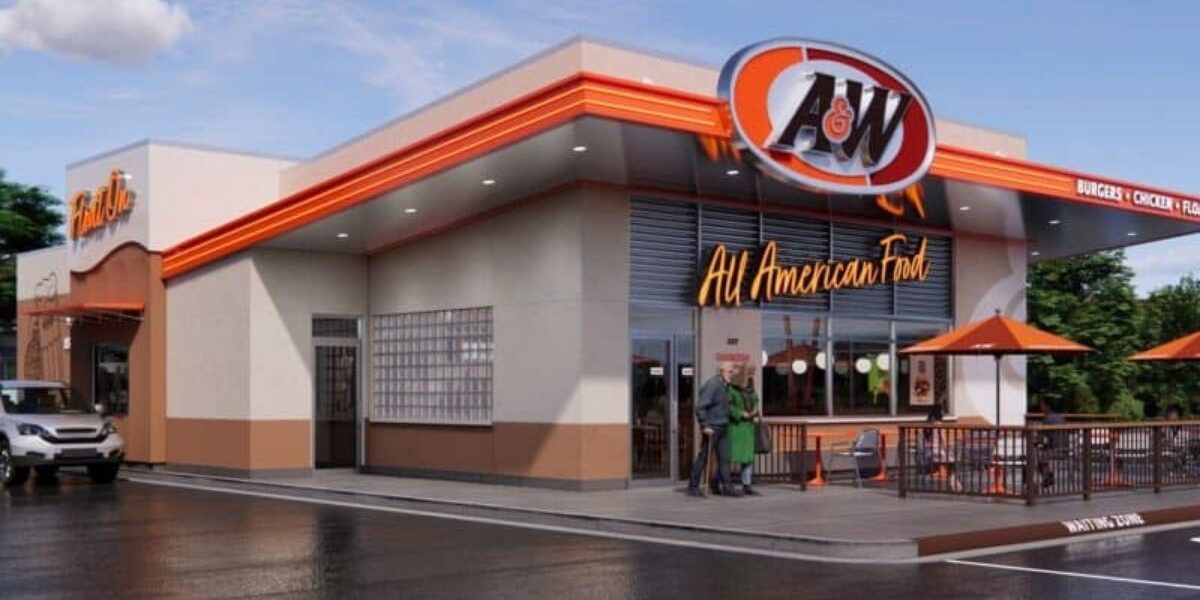
A&W has revealed a new restaurant prototype built around what could be its strongest competitive advantage: its history. The updated concept takes inspiration from the roadside stands and classic diners that helped establish A&W while adding the architecture, technology and flexibility expected from a modern quick-service restaurant.
The move gives A&W a fresh development platform as the company works to expand its U.S. franchise system.
The Past Becomes Part of A&W’s Future
A restaurant brand launched in 1919 has accumulated something that cannot be created through a marketing campaign.
Memories.
For generations of customers, A&W is connected with root beer floats, frosty mugs, drive-ins, burgers and family outings. That emotional connection remains valuable, but history alone does not guarantee future growth.
Modern customers expect convenience, technology and environments that feel current.
A&W’s new prototype attempts to bring those two worlds together.
Instead of designing a completely new identity, the company has returned to the visual language that made the brand distinctive in the first place.
The new restaurants incorporate elements inspired by classic diners and early roadside A&W stands, then reinterpret them through cleaner contemporary architecture.
It is intentionally nostalgic without becoming a museum.
New Restaurants Will Offer Room to Stay
A&W’s new design ranges from approximately 2,200 to 2,800 square feet and provides seating for about 35 to 70 customers.
Those numbers reveal an important part of the company’s thinking.
A&W still believes the dining room matters.
Restaurant development has changed dramatically as digital orders and drive-thru business have grown. Many chains have redesigned stores around speed, pickup shelves and smaller customer areas.
A&W certainly wants convenience, but it also wants customers to have a reason to walk through the doors.
The new prototype therefore gives more attention to comfort and dine-in hospitality than many highly transactional fast-food formats.
That decision connects directly with how A&W wants customers to think about the brand—not simply as a place that sells burgers and root beer, but as a neighborhood restaurant that can become part of a community.
A&W’s Hometown Identity Takes Center Stage
Community has become an important part of the company’s current positioning.
For A&W, this makes sense.
Many of its restaurants operate in markets where the brand has been present for decades, and some locations have remained connected with the same communities across generations.
The company is now trying to translate that heritage into what it calls Hometown Hospitality.
Personal interaction remains part of the experience even as new ordering technology enters restaurants.
That creates an interesting contrast with the direction taken by some competitors.
Fast-food technology is generally designed to reduce friction. Customers can increasingly place an order, collect the food and leave while interacting with few or no employees.
A&W wants those options to exist without making them the only way customers experience the restaurant.
The goal is convenience when customers want it and hospitality when they want that instead.
Technology Helps an Old Brand Feel Current
Behind the nostalgic presentation, A&W has been making substantial changes to modernize restaurant operations.
The company has been upgrading its point-of-sale infrastructure while adding digital ordering options and other technology that gives customers more control over the ordering process.
These improvements are particularly important for younger consumers who may not share the same emotional connection to A&W as previous generations.
For them, a recognizable historic name may create curiosity, but the everyday restaurant experience still has to meet current expectations.
A&W therefore has to accomplish two things simultaneously: preserve the traditions that make the brand different and remove the outdated elements that could hold it back.
That thinking has become an important part of the company’s overall transformation.
“Newstalgia” Gives A&W a Marketing Direction
Leadership has used the idea of “newstalgia” to describe how A&W is approaching its revival.
It is a useful description.
The company is not interested in simply recreating the A&W of decades ago. Instead, it wants to take the parts people remember and give them new relevance.
Root beer is a good example.
A&W continues to make its signature root beer fresh inside restaurants, maintaining one of the traditions most closely connected with the brand.
At the same time, beverages are becoming a larger area of innovation throughout the restaurant industry.
Rather than watching newer chains build excitement around specialty drinks, A&W can participate in that trend using a category that has been central to its identity for generations.
The same strategy is visible in food innovation and marketing. New menu products, updated digital campaigns and greater social media activity can introduce A&W to younger consumers without requiring the company to abandon what existing customers recognize.
Flexible Design Creates More Development Options
The new prototype is also intended to solve a practical franchise growth problem.
No two markets are exactly alike.
A restaurant site that makes sense in Wisconsin might not fit the economics or real estate conditions of another part of the country.
By creating a restaurant that can operate within a range of sizes, A&W gives its development team and franchise partners more room to match the building to the opportunity.
That can help when evaluating both established territories and markets where A&W wants to rebuild its presence.
The company is particularly interested in growth across parts of the Upper Midwest, including areas where awareness of the A&W name remains strong.
Approximately 8 to 12 new restaurants are expected to open during 2026 as the brand continues pushing development forward.
Franchise Ownership Remains an Important Part of A&W
A&W also occupies an unusual position among major American restaurant chains because its system is owned by franchisees.
That structure makes franchise operators particularly important stakeholders in the company’s future.
Modernizing the brand therefore needs to accomplish more than attracting customers. The strategy must also give operators a restaurant model they believe can remain competitive over the long term.
Updated technology, stronger marketing, menu innovation and a more flexible prototype all contribute to that objective.
For a franchise system with such a long operating history, maintaining existing recognition while creating new development opportunities may prove more valuable than attempting a complete reinvention.
A&W Is Trying to Become Relevant, Not Different
Perhaps the most interesting part of A&W’s transformation is what the company is not doing.
It is not trying to erase the root beer stands, old-school diners and Americana that shaped the brand.
Those characteristics are becoming more visible.
The modernization is happening around them.
New technology makes ordering easier. Contemporary architecture updates the appearance. Flexible footprints help franchise development. New products give customers another reason to visit.
But the underlying brand remains recognizable.
For a restaurant company more than 100 years old, that may be the right formula.
A&W does not need to convince people that it has history. Its challenge is convincing a new generation that the history is still worth experiencing.
The new restaurant prototype is designed to help make that case.
Learn more about A&W Restaurants Franchise opportunities.