
Taco John’s Is Taking a More Disciplined Approach to Franchise Growth
Ian Poole Steps Into Development Role With a Profitability-First Mindset
Taco John’s has brought in Ian Poole as vice president of development at a time when the brand is looking for a stronger and more strategic growth path.
Poole is not coming into the role with a simple “open more stores” mindset. His focus is more practical: improve franchisee profitability, reduce development friction and find smarter places for Taco John’s to grow.
Less than a month into the role, Poole has already identified the main target. For him, the “bullseye” is creating better economics for franchise operators.
Value Engineering Could Help Franchisees Grow
One of Poole’s priorities is value engineering. By lowering buildout costs, Taco John’s can make new restaurant development more manageable for franchisees.
That matters because franchise growth depends on whether the numbers work for operators. If the upfront investment is too high or the model is too tight, growth becomes difficult.
Poole said Taco John’s will focus on reducing buildout costs so the company can better identify and work with franchisees. He also said he is excited to collaborate with the leadership team to help grow a legacy brand.
The Brand Is Working Through Unit Count Challenges
Taco John’s has experienced recent declines in its store count.
According to the company’s franchise disclosure document, the brand reported a net loss of 13 units last year and a decline of 24 units in 2024.
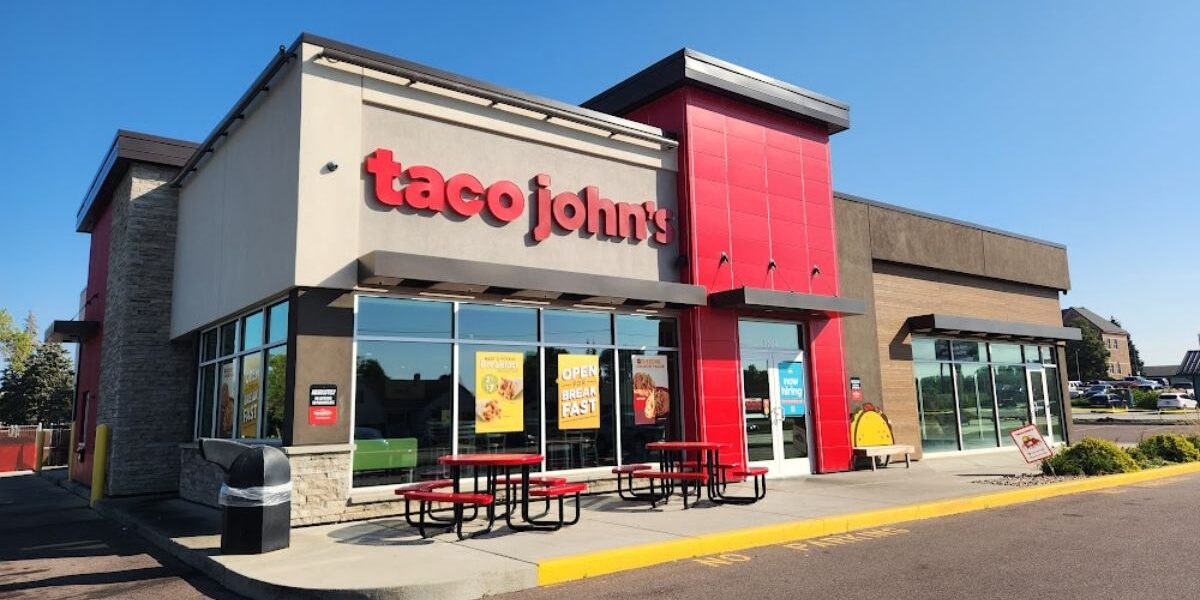
With around 335 locations today, Taco John’s is looking for ways to regain momentum without rushing into growth that may not be sustainable.
Nontraditional Development Is a Major Opportunity
A major part of Taco John’s strategy is expansion into nontraditional venues.
The brand is looking at locations such as convenience stores, airports, universities and travel centers. These settings can provide built-in customer traffic and may require smaller restaurant footprints.
Poole believes Taco John’s fits well in these environments because of its ease of operations, speed and product quality. He sees those qualities as advantages against competitors in high-traffic, convenience-driven locations.
Smaller Footprints Need the Right Menu and Marketing
To support nontraditional franchisees, Taco John’s is working with optimized menus and marketing strategies created for smaller locations.
This is important because nontraditional restaurants often operate differently from full-size units. They may have less space, different customer flow and a need for faster execution.
By adapting menus and marketing to those realities, Taco John’s can help franchisees operate more effectively in these formats.
Data Is Becoming Central to Expansion Decisions
Taco John’s is also using a more data-driven development process.
Poole describes the strategy as both “art and science.” The science includes artificial intelligence and demographic reporting to help guide growth decisions. The art is knowing how to use that information with discipline and how to support franchisees who are ready to expand.
This balance is important. Data can point to opportunity, but leadership still has to make smart decisions about timing, operators and market fit.
Upper Midwest Markets Remain the Foundation
Taco John’s is continuing to build on its existing Upper Midwest footprint.
Poole sees strong potential in these markets because the brand already has a presence there. Existing operators are developing new restaurants, and the company plans to grow first in core markets before expanding more broadly.
Poole said the brand is not yet in a high-velocity growth phase, but it is building toward stronger development.
Poole’s Franchisee Experience Shapes His Strategy
Poole brings experience from both sides of the franchise relationship.
Before joining Taco John’s, he worked with Ambrosia QSR, a franchisee group with more than 200 Burger King, Arby’s and Popeyes locations.
He also served as vice president of development at Subway and held leadership roles with Dunkin’ and Planet Fitness.
Poole said his time on the franchisee side gave him a better understanding of what it takes to run restaurants while working with a franchisor. That experience now helps him make development decisions focused on franchisee profitability.
Taco John’s Plans Up to 10 Openings This Year
Taco John’s is targeting up to 10 new unit openings this year.
Poole expects about two or three of those openings to be nontraditional formats, though he hopes that number will increase as the brand continues to explore and accelerate opportunities in that space.
There is still work ahead, but Poole believes Taco John’s has meaningful opportunity because of the strength of the brand and the potential of smarter, more flexible growth.