
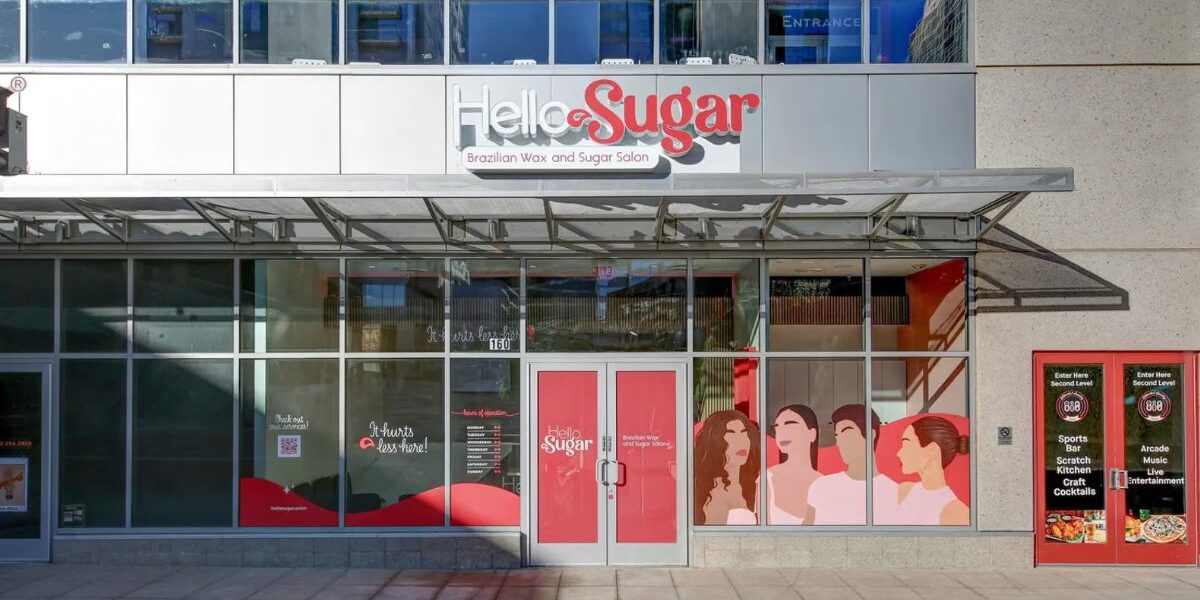

Hello Sugar’s Franchise Growth Strategy Shows Why Starting Small Can Create Bigger Business Opportunities
One of the biggest financial decisions an entrepreneur makes when purchasing a franchise is determining how much capital to commit before the business has established a customer base.
Traditional franchise development often requires an owner to secure a commercial location, complete construction, hire employees, purchase equipment, and invest in marketing before opening day.
That approach can work, but it also places considerable financial pressure on a new operator.
Hello Sugar, a growing American hair removal franchise, has adopted a different strategy.
The company allows franchisees to begin operating from smaller salon suites before progressing into larger flagship locations.
Under founder and CEO Brigham Dallas, the business has expanded to approximately 305 locations as of November 2026.
Its development strategy raises an important question for prospective franchise investors: could a phased approach to business ownership offer a more manageable path to expansion?
The Business Model Behind Hello Sugar’s Expansion
Hello Sugar was established in 2015 with a focus on specialized hair removal services.
The company offers waxing, sugaring, and laser hair removal, positioning itself within the beauty and personal care sector.
Unlike businesses that depend heavily on occasional large purchases, hair removal salons can benefit from customers returning for services at regular intervals.
This characteristic creates opportunities for repeat appointments, memberships, and longer-term customer relationships.
However, recurring demand does not automatically guarantee profitability.
Operators must still manage labor expenses, maintain service quality, compete for local customers, and keep treatment rooms sufficiently utilized.
Hello Sugar’s expansion strategy attempts to address some of these challenges by allowing franchisees to begin with a smaller operating footprint.
Why Opening a Smaller Franchise Location Can Make Financial Sense
The central idea behind Hello Sugar’s model is to separate the initial business launch from the larger real estate investment.
A franchisee first opens a salon suite, typically requiring less space and fewer employees than a conventional storefront.
The initial operation allows the owner to become familiar with staffing, appointment scheduling, customer acquisition, and the day-to-day economics of the business.
As the location develops, the franchisee can prepare for a larger flagship salon.
This approach can provide valuable operating information before additional capital is committed.
For example, an owner can monitor how frequently customers return, which services generate the strongest demand, and how effectively marketing expenditures convert into appointments.
These insights may help inform staffing plans and capacity requirements for a future storefront.
The important distinction is that the smaller location is not necessarily the final business format.
Hello Sugar requires franchisees to eventually progress toward flagship operations, meaning the initial investment is one stage of a broader development commitment.
Understanding the True Cost of a Hello Sugar Franchise
Investment requirements are among the first details prospective franchisees should evaluate.
Hello Sugar’s reported 2026 franchise disclosure figures identify two different investment ranges.
A smaller salon suite requires an estimated initial investment of $92,210 to $130,654.
A larger flagship salon requires approximately $265,374 to $734,705.
The difference is substantial.
For an investor who wants to enter the beauty industry without immediately developing a large commercial location, the suite format offers a lower initial capital requirement.
However, lower startup costs should not be confused with lower total lifetime investment.
A franchisee planning to move into a flagship must consider additional equipment, construction, leasehold improvements, working capital, and potentially expanded staffing.
The financial decision should therefore be based on the full development strategy.
An investor should understand when the transition is expected, how it will be financed, and what performance conditions must be met before expansion.
Revenue Is Not the Same as Franchise Profit
Another important consideration is the difference between reported sales and actual owner earnings.
Hello Sugar’s franchise disclosure information reports average annual net sales of approximately $220,743 for suites and $646,405 for flagship locations.
Although the flagship format generates higher reported average revenue, it also requires more substantial operating infrastructure.
A larger salon may involve higher rent, additional employees, increased utility expenses, greater equipment needs, and more extensive maintenance responsibilities.
The amount remaining after these expenses determines the business’s operating profitability.
For example, two salons with similar revenue can produce very different financial results depending on occupancy costs, labor efficiency, service mix, and customer retention.
Prospective investors should avoid evaluating franchise opportunities based solely on average sales figures.
A more complete analysis should include operating margins, debt obligations, owner compensation, working capital needs, and expected returns on invested capital.
The franchise disclosure document provides an important starting point, but discussions with existing franchisees and independent financial analysis are also valuable.
Why the Transition From Suite to Storefront Matters
As of November 2026, Hello Sugar reported approximately 60 storefronts within its 305-location network.
The remaining locations were primarily smaller suites.
This distribution shows how extensively the company has relied on the smaller-format strategy to establish its presence across the United States.
The next phase of development will involve helping more operators transition into larger facilities.
From an investment perspective, that transition is significant.
A suite can help an entrepreneur establish initial demand, but a flagship introduces a different level of financial responsibility.
Owners may need to manage larger teams, higher fixed costs, more complex scheduling, and increased customer volume.
A successful suite operation does not automatically guarantee that a larger salon will produce an attractive return.
The decision to expand should be supported by realistic forecasts and sufficient capital reserves.
Technology Is Becoming a Major Factor in Franchise Economics
One of the more interesting aspects of Hello Sugar’s business is its investment in technology.
The company reports that approximately 70% of customer inquiries are handled through automated systems.
This can reduce the amount of manual work associated with customer communication and appointment scheduling.
For an appointment-based service business, booking convenience matters because potential customers may contact a salon outside normal business hours.
Automated systems can help capture those inquiries and guide customers toward available appointments.
Hello Sugar has also developed a substantial internal technology team to support its growing network.
The company charges franchisees a reception and customer experience fee of $3.25 per serviced appointment, according to reported disclosure information.
This is an important detail for investors.
Technology can improve efficiency, but its associated fees must be included when evaluating operating expenses.
The relevant question is whether the benefits of centralized services justify their costs and contribute to a stronger customer experience.
The Importance of Recurring Customers in a Beauty Franchise
A hair removal salon depends on more than attracting first-time visitors.
Long-term performance is influenced by how effectively the business encourages repeat appointments and maintains customer relationships.
For that reason, appointment management and membership programs can play an important role in the business model.
Hello Sugar has invested in technology designed to improve the booking process and manage membership activity.
In a customer case study involving Boulevard, the company reported increases in sales volume, appointments, and membership redemptions following its technology implementation.
These improvements illustrate the potential value of customer management systems, although the reported results should not be treated as guaranteed outcomes for new franchise owners.
For investors, the underlying principle is straightforward.
A business that retains customers effectively may have greater opportunities to generate repeat revenue than one that must continuously replace departing customers.
However, retention must be evaluated alongside service quality, customer acquisition costs, and overall operating profitability.
What the Waxxpot Acquisition Reveals About Hello Sugar’s Ambitions
Hello Sugar has also demonstrated an interest in expanding through acquisitions.
In November 2025, the company announced the purchase of assets associated with 20 Waxxpot salons in Georgia, Kentucky, Ohio, and Texas.
This move complemented its existing franchise development program.
Acquiring salon assets can help a growing brand enter additional markets and potentially use established facilities.
However, the success of an acquisition depends on integrating operations, retaining customers, and aligning the acquired locations with the company’s standards.
The transaction reflects Hello Sugar’s broader ambition to build a substantial national presence in the hair removal industry.
What Prospective Hello Sugar Franchisees Should Investigate
Before investing in Hello Sugar or a similar beauty franchise, entrepreneurs should examine several aspects of the opportunity.
Financial readiness: Determine whether sufficient capital is available for both the initial suite and the eventual flagship development.
Local demand: Evaluate population characteristics, competition, customer preferences, and the market’s ability to support recurring beauty services.
Operating expenses: Understand rent, payroll, supplies, insurance, technology charges, royalties, and other ongoing costs.
Franchise support: Assess the training, marketing assistance, technology, and operational guidance provided by the franchisor.
Expansion obligations: Clarify the timeline and contractual requirements associated with moving into a larger storefront.
Existing franchisee experience: Speak with current and former operators about startup challenges, profitability, staffing, and the practical demands of running the business.
Financial performance representations: Review Item 19 of the current Franchise Disclosure Document and determine whether the reported results are relevant to the proposed market and business format.
A franchise investment should ultimately be evaluated on its ability to generate sustainable cash flow relative to the capital and effort required.
Can Hello Sugar Compete With Larger Hair Removal Brands?
Hello Sugar operates in a market that includes established national operators and independent beauty businesses.
Its competitive strategy combines specialized services, a phased development model, and centralized technology.
Founder Brigham Dallas has communicated an ambition to build one of the country’s largest hair removal salon networks.
The company’s reported growth suggests that its approach has attracted franchise development interest.
However, achieving national scale requires more than opening new locations.
Long-term competitiveness will depend on customer satisfaction, brand recognition, franchisee profitability, employee retention, and the ability to support an increasingly large operating network.
As more franchisees transition into flagship locations, their financial performance will become an important indicator of the model’s effectiveness.
Final Thoughts: A Different Approach to Building a Franchise Business
Hello Sugar’s development offers an interesting perspective on how entrepreneurs can approach franchise ownership.
Instead of beginning with a large commercial investment, franchisees enter through smaller salon suites and build toward more substantial operations.
The strategy can provide an opportunity to develop practical experience, establish customer relationships, and evaluate market conditions before expanding.
At the same time, the model requires careful financial planning because the eventual flagship investment remains a significant obligation.
For prospective franchise buyers, the most important lesson is not simply that smaller locations cost less to open.
It is that the timing of capital investment, the strength of the operating model, and the quality of customer demand can influence the long-term economics of franchise ownership.
Hello Sugar’s continued expansion will provide further insight into whether its suite-to-storefront strategy can support profitable and sustainable growth across a nationwide network.
Learn more about Hello Sugar Franchise opportunities.