
Papa Johns Turns to Artificial Intelligence to Solve a Major Franchise Challenge
With approximately 6,000 restaurants worldwide, Papa Johns is testing how AI-powered inspections and customer feedback can improve quality across its franchise network.
Running one successful restaurant is difficult. Maintaining the same product standards across thousands of independently operated locations is an entirely different challenge.
That is one of the fundamental realities of franchising.
A customer ordering from a national restaurant brand expects a familiar experience regardless of which location prepares the food. The product should look, taste, and feel consistent with the brand’s reputation.
However, delivering that consistency across a large franchise network requires continuous training, operational oversight, and effective communication between franchisors and franchisees.
Papa Johns is now exploring whether artificial intelligence can help address this challenge.
The international pizza chain has introduced a program that uses customer-submitted photographs and AI technology to evaluate pizza quality, identify inconsistencies, and provide information that could help franchise owners improve restaurant execution.
The initiative raises an important question for the wider franchise industry: Could artificial intelligence become a standard tool for protecting brand consistency?
Why Quality Control Is a Major Challenge in Franchising
Franchise businesses grow by replicating a successful operating model across multiple locations.
The franchisor establishes the brand standards, products, training systems, and operating procedures. Franchisees are responsible for implementing those requirements within their individual businesses.
In theory, the model creates a consistent customer experience.
In practice, maintaining that consistency requires substantial coordination.
Restaurant employees may have different experience levels. Management teams may interpret procedures differently. Equipment maintenance and daily operating conditions may also vary.
These differences can affect the final product.
For a pizza franchise, even relatively small inconsistencies can influence customer perceptions.
An overcooked crust, uneven preparation, or poorly presented pizza may seem like an isolated problem at one restaurant.
But when similar issues occur repeatedly across a franchise network, they can damage confidence in the entire brand.
Papa Johns CEO Todd Penegor has acknowledged the importance of addressing inconsistent product quality.
The company’s new AI initiative is intended to provide additional visibility into how pizzas are being prepared and delivered throughout its restaurant system.
Using Technology to Monitor Restaurant Standards
Papa Johns already uses artificial intelligence-powered cameras in a limited number of restaurants to examine finished pizzas.
These cameras evaluate visual characteristics that help determine whether the product meets established quality expectations.
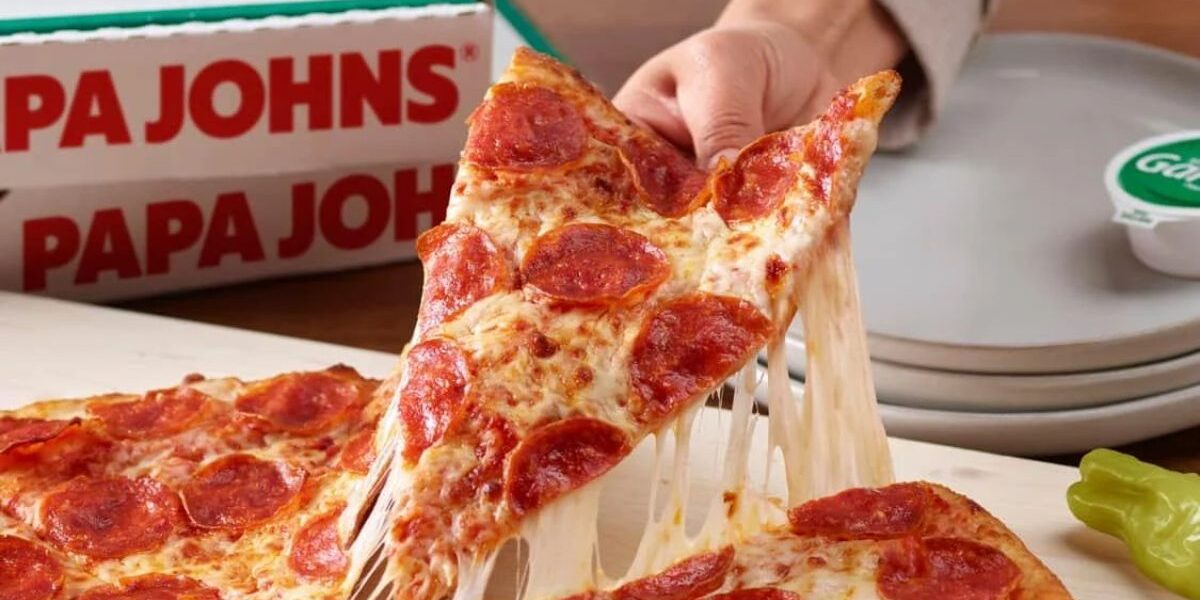
Examples include checking for overly browned cheese, examining pepperoni preparation, and assessing the appearance of the outer crust.
The company has installed this technology in only a few hundred of its approximately 6,000 worldwide restaurants.
That creates an operational limitation.
Although the cameras provide useful information, they do not currently cover most of the franchise network.
Expanding the technology to every location could involve significant equipment and implementation expenses.
Papa Johns is therefore experimenting with a different approach: using photographs taken by customers.
The company hopes that collecting images from delivered orders will allow it to monitor quality across a wider range of restaurants without requiring dedicated inspection cameras at every location.
Customer images are currently less reliable for automated analysis than photographs captured by in-store equipment.
Even so, they could provide valuable additional information about product consistency.
How Customers Are Participating in the Program
Papa Johns launched a limited-time promotion on November 9, 2026, offering eligible customers an incentive to photograph their pizzas and share feedback.
The promotion is scheduled to end November 20.
Customers must participate through the Papa Rewards loyalty program and meet the company’s ordering and communication requirements.
An initial digital order of at least $15 is required.
After receiving their food, eligible customers are invited to submit an unedited photograph of the pizza and comments about its preparation.
Participants who complete the process can receive an offer for a large one-topping pizza, redeemable with a minimum $5 purchase on a subsequent order.
The campaign attracted thousands of submissions during its opening days.
Those photographs and comments are being organized through a centralized dashboard that allows Papa Johns to review customer experiences and identify potential areas of concern.
From a franchise management perspective, this creates an opportunity to collect operational feedback directly from customers rather than relying entirely on traditional restaurant inspections.
What This Could Mean for Multi-Unit Franchise Operators
One of the most interesting potential applications of this technology involves multi-unit franchise management.
An owner operating a single restaurant can often observe daily operations directly.
That becomes more difficult when the same owner operates five, ten, or twenty locations.
As a franchise portfolio expands, the owner becomes increasingly dependent on restaurant managers, operational reporting, and standardized procedures.
A reliable AI-assisted quality monitoring system could provide an additional layer of visibility.
For example, a multi-unit operator might eventually be able to identify whether one restaurant consistently receives more product-quality concerns than others.
That information could help the owner investigate potential causes.
Perhaps one location needs additional employee training. Another may have an equipment issue. A third may require stronger oversight during peak operating periods.
Instead of responding only after complaints become serious, operators could use recurring patterns to prioritize preventive action.
This is a potential application rather than a confirmed capability available to all Papa Johns franchisees today.
The technology remains an evolving initiative, and the company has not demonstrated that customer photographs can replace existing quality assurance systems.
Papa Johns’ Sales Performance Adds Urgency
The timing of this initiative is significant.
Papa Johns reported declining comparable restaurant sales in its third-quarter 2026 financial results.
Global comparable sales decreased 6.5%, while North American comparable sales declined 8.3%.
These figures highlight the competitive pressures facing the pizza chain.
Restaurant brands are operating in an environment where consumers are increasingly sensitive to price and value.
Delivery fees, menu prices, promotional offers, and overall product quality can all influence purchasing decisions.
For an established franchise brand, declining comparable sales can create additional pressure on restaurant economics.
Franchisees must continue paying operating expenses even when revenue weakens.
Improving product consistency is therefore an important operational priority.
However, quality improvements alone may not resolve broader sales challenges.
Successful franchise performance also depends on location economics, marketing effectiveness, competitive positioning, labour management, and consumer demand.
Papa Johns’ AI program should be viewed as one component of its broader improvement efforts rather than a guaranteed solution.
The Relationship Between Franchisor Technology and Franchisee Profitability
Technology adoption within franchise systems introduces an important business consideration.
Who benefits from the investment, and who ultimately pays for it?
Franchisors often introduce new technology to improve brand consistency, operating efficiency, or customer engagement.
Franchisees may benefit through better information, fewer errors, or improved customer satisfaction.
However, new systems can also introduce equipment costs, software expenses, training requirements, and additional operating procedures.
For franchise owners, the value of technology should be measured against its actual impact on the business.
An AI inspection system that identifies recurring preparation problems could be valuable if it helps reduce customer complaints or unnecessary product remakes.
But the benefits must justify any implementation costs.
Papa Johns’ use of customer-submitted photographs is interesting because it may reduce the need for expensive equipment installations.
The company has indicated that the customer-facing technology was relatively inexpensive to develop because it builds on existing AI capabilities associated with its Google Cloud partnership.
The eventual economics of deploying the system more widely have not been disclosed.
Why Human Oversight Still Matters
Artificial intelligence can analyze photographs, detect patterns, and help management teams organize information.
It cannot replace the responsibilities of restaurant employees and operators.
If a pizza is consistently overcooked, identifying the problem is only the beginning.
Management must determine whether the cause involves oven settings, employee training, preparation procedures, or another operational factor.
Corrective action requires human judgment and follow-through.
This distinction is particularly important in franchising.
Successful franchise systems rely on strong relationships between franchisors and franchisees.
Technology should support those relationships by providing useful information and helping operators improve performance.
If implemented poorly, however, excessive monitoring could create unnecessary administrative burdens or friction between franchise owners and corporate leadership.
The objective should be to use data as a tool for operational improvement, not simply as a mechanism for identifying mistakes.
How Artificial Intelligence Could Influence Franchise Development
The implications of AI-powered quality monitoring extend beyond existing restaurant operations.
Technology capabilities may increasingly influence how prospective franchise buyers evaluate opportunities.
Investors considering a franchise typically examine several factors, including brand reputation, training, operating systems, financial requirements, and ongoing support.
As artificial intelligence becomes more common, technology infrastructure may become another important consideration.
A franchise system with effective data analytics, operational monitoring, and customer feedback tools could potentially offer stronger support to its franchisees.
However, prospective investors should distinguish between announced technology initiatives and systems that have demonstrated measurable results.
A franchisor’s use of artificial intelligence does not automatically mean its franchise locations are more profitable.
The relevant questions concern implementation, cost, effectiveness, and whether the technology contributes to better unit-level economics.
For prospective franchisees, these considerations should form part of broader due diligence.
What Other Franchise Brands Can Learn From Papa Johns
Although the initiative focuses on pizza preparation, the underlying concept has potential applications across several franchise categories.
In quick-service restaurants, computer vision could help evaluate food presentation, portion consistency, or preparation standards.
In automotive service franchises, image analysis might assist with documenting vehicle condition or identifying visible service concerns.
In cleaning franchises, photographs could support quality verification and help managers evaluate completed work.
In retail franchises, visual monitoring could potentially assist with merchandising consistency and store presentation.
These are possible applications rather than established outcomes of the Papa Johns initiative.
Each industry would require technology appropriate to its operations, along with careful consideration of accuracy, privacy, and implementation costs.
The broader opportunity lies in using technology to strengthen consistency as franchise networks expand.
A New Direction for Franchise Operations
Papa Johns’ decision to use artificial intelligence for pizza inspections reflects a growing recognition that technology can support areas of franchising beyond sales and marketing.
The company is attempting to connect customer feedback with restaurant-level operational information.
If successful, the initiative could help franchisees identify recurring quality problems and improve the consistency of their products.
It could also provide the franchisor with better visibility across a geographically dispersed network.
Still, the program’s long-term impact remains uncertain.
The company will need to evaluate whether customer-submitted images provide sufficiently accurate information and whether that information leads to measurable operational improvements.
For franchise owners and industry professionals, the development is worth following.
Franchising has always depended on replicating a successful business model while maintaining consistent standards.
Artificial intelligence may offer new ways to support that objective, but it does not change the fundamentals.
Strong franchise systems still require effective leadership, comprehensive training, sound unit economics, and franchisees who consistently execute the operating model.
Technology can strengthen those foundations. It cannot substitute for them.
The future of franchising may become increasingly data-driven, but the success of individual locations will continue to depend on how effectively operators turn information into action.
Learn more about Papa John’s Franchise opportunities.