
PayMore’s Explosive Franchise Growth Signals a Shift in Retail Investment
From 58 to More Than 150 Stores: Why PayMore Is Attracting Multi-Unit Franchise Investors
When people think about buying a franchise, restaurants, coffee shops, fitness studios, and cleaning businesses often come to mind first.
But some of the most interesting developments in franchising are happening in industries that receive far less attention.
One example is PayMore, an electronics resale business that has grown from approximately 58 stores at the end of 2024 to more than 150 locations in November 2026.
That is nearly three times its previous footprint in less than two years.
What makes the company’s expansion particularly interesting is not simply the number of new stores. It is the type of franchise owners helping drive that growth.
PayMore is attracting experienced multi-unit operators who see an opportunity in the business of buying, selling, and recycling used technology.
For entrepreneurs evaluating franchise ownership, the company’s progress raises an important question: Could electronics resale become a more established category within the franchise industry?
Why PayMore’s Business Model Is Different
PayMore was founded in 2011 in Massapequa, New York, by Stephen Preuss and Erik Helgesen.
The concept was built around a straightforward consumer problem.
People regularly upgrade their smartphones, computers, gaming systems, and other electronic devices. Many of their older products still have resale value, but selling them privately can be inconvenient.
Buyers face a different challenge. They may want affordable pre-owned technology but feel uncomfortable purchasing expensive electronics from unknown individuals.
PayMore attempts to solve both problems through a physical retail location.
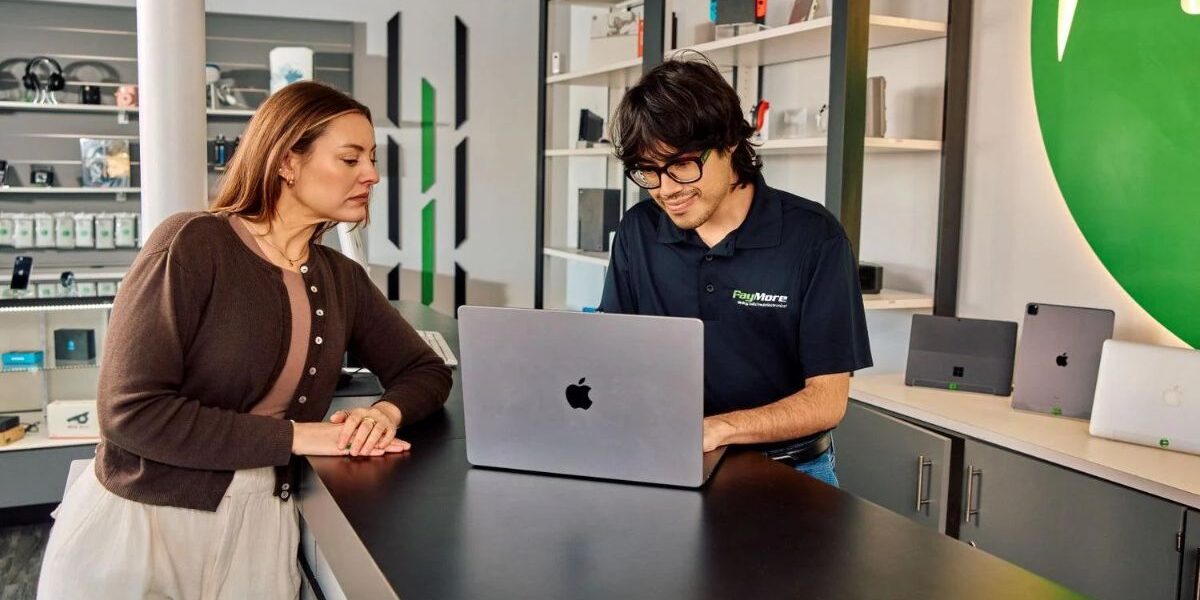
Customers can bring eligible electronics to a store, have them evaluated, and receive an offer to sell them.
Other customers can purchase tested pre-owned devices, while electronics that are no longer suitable for resale can be directed toward recycling.
The business combines elements of retail, recommerce, and consumer services.
Unlike a conventional electronics retailer, PayMore acquires products directly from consumers as an important part of its inventory model.
That distinction is central to understanding the franchise opportunity.
From One Store to a North American Franchise Network
PayMore operated its original business for several years before beginning franchise expansion in 2020.
The company’s growth accelerated as it attracted additional franchise investors and entered new markets.
By the end of 2024, approximately 58 locations were operating across North America.
In November 2026, the company reached its 150-store milestone with a new location in Baton Rouge, Louisiana.
The network subsequently reached approximately 151 stores.
PayMore has also reported more than 300 additional franchise locations sold but not yet open.
Its development objectives include reaching approximately 165 operating stores by the end of 2026 and 250 by the end of 2027.
These figures show how quickly an emerging franchise concept can expand when its development pipeline grows.
However, it is important to distinguish operating locations from signed franchise commitments.
A development agreement represents an intention and contractual commitment to open a business, while an operating store has completed the necessary steps to begin serving customers.
For prospective franchise buyers, understanding that difference is essential when assessing any brand’s growth claims.
Why Established Franchise Owners Are Investing in PayMore
One of the most revealing aspects of PayMore’s expansion is the participation of experienced franchise operators.
Multi-unit investors generally evaluate a business through a different lens than someone purchasing their first franchise.
They want to know whether the concept can be replicated, whether managers can be trained effectively, and whether the economics justify opening additional locations.
They also consider how a new brand might complement their existing investments.
PayMore has attracted operators with experience in other franchise sectors, including restaurant businesses.
Investor groups such as Imbue Capital have been part of the company’s growth story.
The company has also highlighted franchisees who increased their development commitments after operating within the system.
This is an important development because it suggests that the electronics resale category is receiving attention from investors accustomed to evaluating established franchise models.
It does not automatically mean that every PayMore location is profitable or that the opportunity is suitable for every buyer.
Rather, it shows that experienced operators consider the business worth evaluating as part of a broader franchise portfolio.
Consumers Are Rethinking How They Buy Electronics
A significant part of PayMore’s opportunity comes from changing consumer purchasing behaviour.
New electronics can represent a substantial household expense, especially when several family members require smartphones, computers, or other devices.
At the same time, technological improvements do not necessarily make every older device obsolete.
A laptop, gaming console, or smartphone that one person no longer needs may still be useful to another customer.
This creates a market for businesses that can evaluate, purchase, and resell electronics efficiently.
PayMore also offers a physical shopping experience in a category where many transactions occur online.
Customers may value the opportunity to visit a store, speak with an employee, and examine available products before making a purchase.
The company’s business model also fits into the broader circular economy, which emphasizes extending the useful life of products through reuse, resale, repair, and recycling.
For franchise investors, the relevant question is whether these consumer behaviours can support sufficient transaction volume and margins in a specific territory.
The Numbers Behind PayMore’s Recent Performance
PayMore’s reported 2026 operating figures provide additional context for its expansion.
During the third quarter, the company reported a 47% increase in same-store electronics sales dollars compared with the previous year.
It also reported a 49% increase in same-store electronics purchase dollars.
By September 2026, the network had purchased more than 800,000 devices from consumers during the year.
These figures indicate that the company’s activity was increasing at existing locations as well as through new store openings.
That distinction matters.
A franchise system can increase total revenue simply by opening more locations. Strong same-store growth, by contrast, indicates that established stores are experiencing higher activity.
Nevertheless, higher sales do not necessarily translate into higher profits.
In an electronics resale business, margins depend on the difference between inventory acquisition costs and resale prices, along with the expenses required to operate the store.
Investors must also account for products that decline in value, remain unsold, or require additional testing and handling.
How Much Does a PayMore Franchise Cost?
For entrepreneurs considering the business, the initial financial requirements are an important starting point.
Based on the franchise investment information provided for PayMore, the estimated financial requirements include:
- Initial investment: $184,050 to $299,950
- Initial franchise fee: $30,000
- Minimum liquid capital: $100,000
- Minimum net worth: $500,000
- Royalty: The greater of 4% of gross sales or $1,000 per calendar month
- Advertising contribution: 2% of gross sales
These are indicative franchise figures and should be verified against the current Franchise Disclosure Document.
The initial investment is only one part of the financial evaluation.
A prospective owner should also understand working capital needs, inventory purchasing requirements, staffing costs, lease obligations, and the time required to establish consistent customer traffic.
Because PayMore purchases electronics directly from consumers, access to sufficient inventory acquisition capital is another operational consideration.
What Are the Risks of Owning an Electronics Resale Franchise?
Every franchise category carries risks, and electronics resale is no exception.
One of the biggest challenges is inventory valuation.
Technology prices can change quickly when manufacturers release new products or consumer preferences shift.
A device purchased at an attractive price today may become less valuable if market demand declines.
Fraud prevention is another consideration. Stores need procedures to assess device ownership, authenticity, condition, and eligibility for resale.
Data security is also important because many electronics contain personal information.
Operators must follow appropriate procedures for handling devices and protecting customer information.
Finally, local demand matters.
A business model that performs well in one metropolitan area may produce different results in a smaller community with lower transaction volume.
These are reasons why prospective franchisees should conduct market research, review financial disclosures, and speak with existing operators before committing capital.
What Support Does PayMore Provide Franchise Owners?
PayMore has developed franchise support systems intended to help owners establish and operate their locations.
The company’s stated support structure includes assistance with site selection, store build-out, training, operational guidance, and access to its franchise portal.
The portal provides resources such as training materials and workflow documentation.
Franchisees also receive access to operational and technical support.
As the network grows, PayMore has continued investing in pricing intelligence, automation, marketing resources, and technology designed to standardize transactions across locations.
These systems are particularly important in a business where employees must evaluate a wide variety of products.
However, prospective owners should examine the scope of these services carefully.
The existence of training and operational support does not eliminate the franchisee’s responsibility for hiring, management, inventory control, and financial performance.
Is PayMore a Good Franchise Investment?
PayMore’s recent growth makes it a noteworthy franchise concept, but growth alone is not enough to determine investment quality.
Before buying any franchise, I believe entrepreneurs should evaluate the opportunity from three perspectives.
First, understand the actual economics of operating a location. Review available financial performance representations, speak with existing franchisees, and develop realistic projections based on the intended market.
Second, evaluate the operational requirements. A franchise may offer a recognizable brand and established systems, but owners still need to understand the daily responsibilities and management demands.
Third, consider the long-term market opportunity. The ability to open additional locations can be valuable, but expansion should follow proven performance rather than assumptions about future growth.
PayMore offers an example of a franchise concept operating in a specialized retail category with growing consumer awareness.
Its expansion suggests that investors are increasingly willing to explore opportunities outside traditional franchising sectors.
Whether it represents a suitable investment depends on the buyer’s financial position, experience, goals, and understanding of the business model.
What PayMore’s Growth Means for the Future of Franchising
PayMore’s journey from approximately 58 stores to more than 150 locations illustrates how quickly an emerging franchise system can develop when it attracts experienced operators and builds a substantial expansion pipeline.
Its reported same-store sales growth and continued franchisee investment add further context to that development.
But the next stage will be especially important.
With a target of approximately 250 operating locations by the end of 2027, PayMore must continue opening stores while maintaining the operational standards and support systems required by a larger network.
For aspiring entrepreneurs, the bigger lesson is that franchise opportunities are no longer limited to familiar industries.
Specialized retail, technology-related services, and businesses built around changing consumer habits deserve consideration alongside traditional franchise categories.
The most important question is not which franchise is growing the fastest. It is which business model offers the right combination of market demand, financial viability, operational fit, and long-term potential for the individual investor.
Learn more about PayMore Franchise opportunities.