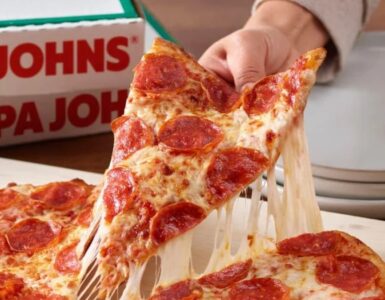
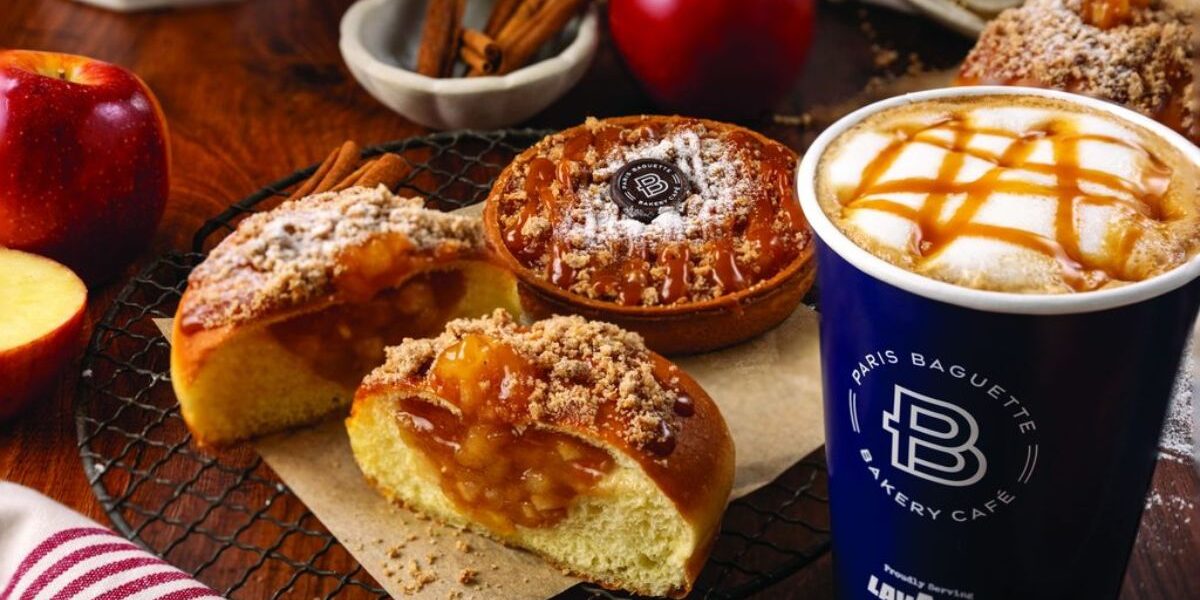

From Eight Jimmy John’s Restaurants to Six Paris Baguette Cafés: A Franchise Entrepreneur’s Next Move
Bret Feaster’s decision to invest in Paris Baguette reveals how customer experience, business discipline, and long-term planning can influence the next stage of franchise ownership.
Sometimes, a significant business opportunity begins with something as ordinary as walking into a café.
For Michigan entrepreneur Bret Feaster, that moment came during a visit to New York City with his wife, Shelby.
The couple discovered Paris Baguette near their hotel and quickly became regular customers during their short stay.
They enjoyed the bakery so much that they visited five times in four days.
But Feaster was not simply another customer appreciating the pastries and coffee.
He was already an experienced restaurant franchise owner who had spent a decade building a successful multi-location business.
The experience prompted him to ask a question that would eventually shape his next investment: Could this bakery concept succeed in his home market?
That question led to a development agreement for six Paris Baguette locations across West Michigan.
Building a Restaurant Business One Location at a Time
Feaster’s business career did not begin in the restaurant industry.
After studying business management at Ferris State University, he pursued a career in professional golf and worked in California.
He eventually returned to Michigan, where an opportunity to enter restaurant franchising became available through his family.
In 2015, he opened his first Jimmy John’s location.
Over the next ten years, the business expanded to eight restaurants in the Kalamazoo area.
Growing from one restaurant to eight required more than an initial investment.
It involved developing management capabilities, recruiting employees, maintaining service standards, and learning how to oversee operations across multiple locations.
Those experiences would later influence Feaster’s approach to evaluating a second franchise brand.
Recognizing When It Is Time to Diversify
Business owners often associate growth with doing more of what has already worked.
For a franchisee operating a successful restaurant, that might mean opening additional locations under the same brand.
But expansion becomes more complicated when a market begins approaching its practical capacity.
Feaster had already established a significant Jimmy John’s presence in his region.
Opening more sandwich restaurants in nearby areas was not necessarily the most attractive way to continue growing.
He began researching alternative franchise concepts that could provide new opportunities without directly duplicating his existing business.
The search took several years.
He wanted an established company with a credible operating history, a recognizable brand, and procedures that could support consistent execution.
Paris Baguette ultimately met the criteria he was looking for.
The Customer Experience That Sparked a Business Decision
During their New York City trip in 2025, Bret and Shelby discovered Paris Baguette while exploring the area near their hotel.
The bakery’s selection of pastries, breads, cakes, and other products caught their attention.
After trying the food, they returned repeatedly.
For many customers, that would have been the end of the story.
For Feaster, the experience suggested something more.
He believed that a similar bakery-café could appeal to customers in Michigan, where the brand had not yet established a substantial presence in the western part of the state.
He contacted Paris Baguette to explore franchise opportunities.
That initial inquiry led to conversations with the company, a review of its business model, and an eventual agreement to develop six cafés.
The important distinction is that the couple’s enthusiasm introduced them to the opportunity, while further business evaluation helped inform their decision to invest.
Why the Paris Baguette Business Model Stood Out
Paris Baguette is an international bakery-café chain founded in South Korea in 1988.
The brand combines bakery products, specialty cakes, sandwiches, and beverages in a retail format designed to serve several customer occasions.
Its menu includes familiar European-inspired bakery products alongside offerings influenced by Asian baking traditions.
For customers, that variety creates opportunities to visit for different reasons.
Someone may stop for coffee in the morning, purchase a sandwich at lunch, or order a cake for a celebration.
For a franchise operator, this range of products creates multiple potential revenue streams within one location.
However, it also adds operational complexity.
A bakery-café must coordinate production schedules, food preparation, ingredient management, product presentation, and customer service.
The strength of the franchisor’s operating systems therefore becomes particularly important.
Feaster has emphasized the value of established procedures and product consistency when explaining his interest in the brand.
Looking Beyond the Brand Name to the Numbers
A recognizable brand and appealing products can attract interest, but experienced investors generally need stronger evidence before making a financial commitment.
Paris Baguette reported approximately $2.7 billion in global systemwide sales for 2025.
Its U.S. cafés also reported average unit volume of around $3 million.
Those figures helped demonstrate the company’s commercial scale and the performance of its existing locations.
Nevertheless, revenue figures alone cannot establish whether a franchise will be profitable for an individual owner.
A café generating substantial sales may still face significant operating expenses.
Rent, wages, food costs, equipment maintenance, utilities, financing, and franchise fees all influence profitability.
For anyone considering a franchise investment, the more useful question is not simply how much an average location sells.
It is how much cash flow a realistically performing location could generate after expenses and whether that return justifies the capital invested.
This is especially important when considering a multi-unit agreement involving several future openings.
Bringing Paris Baguette to West Michigan
Feaster’s new ownership group plans to introduce six Paris Baguette cafés across West Michigan.
The development area includes Portage, Kalamazoo, Grand Rapids, and surrounding communities.
The first location, in Portage, is expected to open toward the end of November 2026.
Another café is planned for Grand Rapids, with construction targeted to begin in early 2027.
The remaining locations are expected to follow as the ownership group develops its regional presence.
The business partners involved include Shelby Feaster, Summer Mencl, and Josh Nagel.
Mencl’s existing experience as a district manager in the Jimmy John’s operation adds restaurant management knowledge to the partnership.
The team-based approach is important because managing several locations requires more than one person overseeing every operational detail.
As businesses grow, owners typically need to delegate responsibilities to trained managers and establish systems that allow performance to be monitored consistently.
The Importance of Building a Management Team
One of the biggest challenges in multi-unit franchising is the transition from being an operator to becoming a business leader.
At a single location, an owner may be directly involved in hiring, scheduling, purchasing, customer service, and daily problem-solving.
With several locations, that approach becomes difficult to maintain.
The owner must increasingly rely on managers, supervisors, and standardized operating procedures.
Feaster’s experience operating eight Jimmy John’s restaurants provides a foundation for this transition.
He has previously discussed how additional locations can make it possible to establish more layers of management and support staff.
That does not mean operating more stores is automatically easier.
It means that a well-structured multi-unit business can eventually create opportunities for the owner to focus on leadership, performance, and future development rather than every daily task.
The challenge is building that structure without allowing costs or operational complexity to grow faster than the business.
Five Lessons for Entrepreneurs Considering Franchise Ownership
Feaster’s expansion offers several useful lessons for individuals exploring franchising as a business opportunity.
1. Start with a business model you understand
A franchise should align with the owner’s interests, skills, and willingness to manage its day-to-day requirements.
2. Do not confuse a great product with a guaranteed investment
Customer enthusiasm is valuable, but financial performance, operating costs, and market demand must also support the opportunity.
3. Understand the limits of your existing market
A successful business may eventually reach a point where further local expansion creates more competition than incremental opportunity.
4. Invest in people before scaling aggressively
Strong managers and reliable systems are essential when an owner becomes responsible for multiple locations.
5. Evaluate the franchisor as carefully as the franchise concept
Training, operational procedures, marketing support, product development, and leadership quality can influence the long-term franchise relationship.
Why Multi-Brand Franchise Ownership Is Worth Understanding
Owning multiple brands can create a different type of business portfolio from operating several locations of a single concept.
It allows entrepreneurs to participate in more than one customer category while potentially using some shared management expertise.
For example, a restaurant operator may understand labor scheduling, food safety, local marketing, and customer service regardless of whether the business sells sandwiches or baked goods.
At the same time, each brand has its own standards, supplier relationships, equipment requirements, and operating culture.
That makes multi-brand ownership a strategy best approached with careful planning rather than simply adding another franchise agreement.
The most successful expansion plans are generally built around available capital, experienced leadership, realistic development schedules, and a clear understanding of the local market.
Paris Baguette’s Bigger American Ambitions
Feaster’s development agreement is part of a much larger growth initiative.
Paris Baguette operates more than 4,000 cafés worldwide and has established hundreds of locations in the United States.
The company’s stated objective is to reach 1,000 U.S. cafés by 2030.
Achieving that goal will require expansion into new markets, additional franchise investment, and the recruitment of operators capable of maintaining brand standards.
Regional development agreements with experienced franchisees can play an important role in that process.
West Michigan offers Paris Baguette an opportunity to establish a stronger presence outside the Detroit metropolitan area.
For Feaster and his partners, it creates a chance to build a second restaurant brand in communities they already know.
Final Thoughts: Growth Begins With the Right Opportunity
The most interesting part of Bret Feaster’s story is not simply that an eight-unit Jimmy John’s franchisee is opening six Paris Baguette cafés.
It is how the opportunity emerged and the experience he brought to evaluating it.
A positive customer experience sparked the initial interest. Years of restaurant ownership provided the background to assess the opportunity. A multi-person ownership team helped establish the foundation for expansion.
There is no guarantee that every planned café will achieve the financial performance of the brand’s established locations.
But the decision illustrates an important principle of entrepreneurship: business growth is not always about repeating the same formula.
Sometimes, the next opportunity comes from recognizing a different customer need, entering a new category, and applying experience gained from an existing business.
For aspiring franchise owners and established operators alike, that combination of curiosity, due diligence, and operational discipline is worth understanding.